The Cabinet of Dr Caligari(1920,Decla-Bioscop AG , Robert Wiene)22.55-00.05
Quatermass 2(1957, Hammer, Val Guest)00.05-01.20
I’d like to share a moment with you, if I may.
A couple of nights ago, I took my dog out into the garden. Nothing remarkable in that, admittedly – a last late-night pee for the hound gives me a better chance of not being woken at five in the morning by a yowling cross-legged canine, so it’s part of a regular routine. What was less regular, however, as I stood looking at the stars and waiting for the doggy leg-lift to signal bedtime, was that quite suddenly a pair of bats scuttered overhead, circling above me maybe four or five times before disappearing. That’s unusual here. I’m not sure why, there’s plenty of trees and old buildings around which might make it seem like suitable territory, but still a bat-sighting is much rarer around my house now than it was anywhere I’ve previously lived. As such, I was startled and consequently completely unprepared for the quite extraordinary Proustian rush the moment bestowed upon me. In that moment, quite suddenly, I was twelve again. Not remembering, not recalling, but actually twelve, deep down inside myself, just for an instant. For reasons that don’t need going into here it’s been a difficult few days personally, but all that was simply gone – all the anxieties and complexities that adulthood and parenthood and late middle age inevitably brings were gone, and just briefly I was once more a wide-eyed adolescent on the edge of something magical.
You see, back garden bats flitting and skittering against a nightblue sky on a long summer evening was always one of the markers of the Saturday night excitement, the sheer ‘can’t waitness’ with which I used to anticipate each BBC2 Saturday night horror double bill back in the late 70s and early 80s. And those were the moments I was suddenly and magically experiencing once more, for just the briefest of spells. For that, I’d like to thank my unexpected bat-guests. But I’d like to thank the horror double bills themselves even more. It’s remarkable to me that the impact those strange and wonderful old films had on me all those years ago was so profound, and is so deeply embedded in me, that even that briefest of glimpses of the way they made me feel was enough, however briefly, to simply erase whatever worries and difficulties were preoccupying me in the here and now.
And this is a good and special moment to pay that kind of tribute to the horror double bills, because they are fifty years old today. I usually try not to be too topical in anything I post on here, since it may end up having little or no relevance if someone reads it at a later date, but in this instance I’ll say it loud and proud. This is Saturday the second of August 2025, and exactly fifty years ago to the day, Saturday the second of August 1975 marked the very first pairing in the legendary BBC2 summer seasons of horror double bills.
I must confess that, like an unreconstructed 1950s husband, I wasn’t present at the birth. I only came to the double bills a couple of years later, in 1977 – there’s an excellent book about it which I heartily recommend – and, when my slightly older and equally horror-obsessed cousin mentioned to me at some point a year or so later that there had been a couple of seasons before 77 I found it difficult to believe at the time since that season – given the umbrella title ‘Dracula, Frankenstein and Friends’ – had seemed such a perfect introduction to the genre. Nonetheless it was true, and I must say that the double bill pairing which kicked it all off in 1975 wasn’t a bad place to start.
Many would argue that The Cabinet of Dr Caligari could be seen as the very first horror film. It was certainly extraordinarily influential; the film that launched German Expressionism in the cinema, a movement that was responsible for much of the visual style characteristic of the classic Universal horror films of the 30s and 40s. Even so, I’ll stand by my opinion, expressed in print in the aforementioned excellent book, that the expressionist masterpieces of the 20s are arthouse experiments rather than genre films, and that consequently the 1931 Lugosi Dracula (with which the 1977 season began) is the first true horror movie. That’s not to undervalue Caligari however. Even today, at a century’s distance, it’s an extraordinary and unsettling watch. The artistic courage to dispense altogether with any pretence at naturalism is astounding. Of course George Méliès’ magic box of tricks preceded Caligari, but his films, visionary as they were, utilised trick photography and fantasy elements to supplement an essentially real world. Caligari, on the other hand, replaces the external world entirely by putting inner psychological turmoil on screen, in the mise en scene, in those extraordinary angular sets, in the painted shadows, in the on-screen text (ninety years before Sherlock!) which persecutes Caligari as he walks, in the stylised performances. The result – appropriately enough – is mesmerising. Much of the visual iconography – the black-clad ‘monster’, the white-clad swooning heroine, the pursuit over the rooftops, even the mad scientist trappings of Caligari himself – continues to echo down the years and through the history of the horror film. For me, at least, the most powerful moment of all – the close up in which Conrad Veidt’s somnambulist Cesare slowly opens his heavy eyes to reveal a gaze that seems to be staring out from another dimension – sees its fullest inheritance in Karloff as The Monster, or as Im-Ho-Tep, but even finds a distant echo in Reece Shearsmith’s strange, glassy and quite terrifying grin as he emerges from a tent which contains Hell in Ben Wheatley’s 2013 A Field in England.
It can often be seen as a sign that a film is Important with a capital ‘I’ when so many people involved are eager to claim it as theirs. Look at the authorship debates surrounding Citizen Kane for instance. If so Caligari is A Very Important Film Indeed. The writers, Carl Mayer and Hans Janowitz, maintained that all of the film’s innovations – set design included – were the result of their script. They also claimed that the film’s framing device (that the story is a tale told by a madman in an asylum) was the disastrous intervention of the director Robert Wiene, who otherwise contributed little, and had the effect of neutering their intended political message about a generation sleepwalking into war under the control of sinister higher powers. Their claims are repeated pretty much verbatim in Siegfried Kracauer’s very influential critical work From Caligari to Hitler and for many readers as a result became almost the ‘official’ version. Wiene, however, deserves greater recognition. If nothing in his later career quite reached the heights of Caligari – and the same could certainly be said for the scriptwriters – Raskolnikow, his 1923 adaptation of Dostoevsky’s Crime and Punishment, and 1924’s The Hands of Orlac show that he could find his own way around expressionist design and filmmaking very effectively. One might easily argue, in fact, that the decisive contribution to Caligari came neither from Wiene nor Mayer and Janowitz but from the production designer Hermann Warm. Of course, no matter what the 1950s Cahiers Du Cinema critics might say, no film, however idiosyncratic, ever truly has a single auteur. By its very nature film, like theatre, is a collaborative medium, and the power of Caligari comes from the contributions of all its creators – as well as the remarkable performances of Conrad Veidt (better known to later audiences as Casablanca’s evil Nazi) and Werner Krauss. And all together, the creators of Caligari produced a remarkable, and remarkably influential masterpiece which, if it’s not quite the first horror film, is certainly its spooky godfather and a more than appropriate choice to launch the BBC2 horror double bills.
So too was its second of August bedfellow, even if beginning a film series with a sequel might seem a somewhat odd call. Still, after Caligari, there can have been few works more influential and through-the-years important than Nigel Kneale’s Quatermass stories, and if the first in the series of Hammer’s big-screen adaptations The Quatermass Xperiment might have been a more chronologically logical starting point, and if, at least for me, their third, Quatermass and the Pit, would have been a more atmospheric and profoundly unsettling one, no less a student of Hammer Films than David Pirie names Quatermass 2 as the best of the bunch, and who am I to argue?
It’s certainly true to say that there hasn’t been a paranoid sci-fi/horror hybrid since Quatermass 2 which doesn’t owe it something – with the possible exception of Invasion of the Body Snatchers, and that only because the two films were made almost contemporaneously. Whether it be the alien-possessed human beings, the sense of government and government agencies themselves being infiltrated and controlled, the idea of vast conspiracy, wheels within wheels and secret government institutions, the sense of drift towards totalitarian control – some of the plot elements and imagery in Kneale’s script were themselves partly inspired by his own recent experience adapting Orwell’s Nineteen Eighty Four for a controversial 1954 television play. Even the changing post-war British landscape – huge industrial complexes and new towns – is grist for Kneale’s hugely influential paranoid mill. And unlike the preceding Quatermass Xperiment – for which he began a lifetime tradition of hating productions of his own work – Kneale had the opportunity to write the screenplay for Hammer’s Quatermass 2 himself and was able, to some extent, to soften the rougher edges of American actor Brian Donlevy’s bulldozing Quatermass which he had found so unwelcome in the first film.
The result is urgent, frightening and powerfully effective, a semi-apocalyptic vision of Britain and the world which Kneale would push to even further near-future extremes in the final instalment of his Quatermass saga, the simply titled Quatermass, made for ITV in 1979 with John Mills. And in the moment a man stumbles down an iron stairway covered from head to foot in a kind of glutinous, burning alien black oil, Quatermass 2 offered – even if it was unbeknownst to me at the time it screened on Saturday 2nd August 1975 – the first in a long series of memorably striking and horrific single images which were to form a central and pivotal thread in my lifelong relationship with the double bills, and with the horror genre more generally. A gravedigger’s spade piercing a coffin in Kiss of the Vampire, John Laurie’s Mad Peter foaming at the mouth in The Reptile, the crash zoom into Christopher Lee’s disfigured face in Curse of Frankenstein, or to the ‘poor wretch’ buried alive in Premature Burial, and on, and on.
Those moments, and so many, many others from so many, many films remain burned into me, wonderfully and indelibly, and it was such moments, and all the things they have meant to me for the past fifty years, that I found myself so suddenly and surprisingly flashing back to just the other night as two bats wheeled and flickered around my head. And just as the double bills themselves had offered me comfort, and reassurance, and joy, and escape in those long gone and far away 1970s nights, I found to my delight they still retained – albeit briefly – the power to transcend and supersede the fears and stresses and failures with which every life, mine certainly included, must contend, in much the same way as they have been helping me to do for almost fifty years.
So, horror double bills, a very happy fiftieth birthday to you. My best wishes, and thanks, always.
‘Then the day when the sadness comes. Then we ask, ‘Will the sadness which makes me cry, will the sadness that makes me cry my heart out, will it ever end?’ The answer, of course, is yes. One day, the sadness will end.’
The Log Lady, Introduction to Twin Peaks Episode Three
This is a difficult post. I’m beginning to write on the day of David Lynch’s death, and although the fact that I tend to work at roughly the speed with which the world’s most decrepit room service waiter delivers a glass of warm milk in the Great Northern Hotel suggests that it will be some considerable time before I finish, I can confidently predict that the sadness will not have ended by then. And I do feel sad, deeply and profoundly sad, despite the fact that I usually find the excessive online outpourings of faux-grief over the death of some celebrity none of us has ever met more than a little uncomfortable. This is different. This feels different. I’m feeling a sadness far stronger than the death of someone I didn’t know personally has ever inspired in me before. In fact, awful though it is to say, also far stronger than the deaths of several people who I did know personally.
It leads me to wonder why. After all, Lynch was 78. Not very old by modern standards, but still not a bad knock. A handy few years beyond the biblically allotted three score years and ten. Not really a premature death. And not a shockingly unexpected one, given that Lynch had been in failing health for some time. The entirely characteristic tone of his public declaration that he was suffering from emphysema remains perhaps my favourite such celebrity disclosure:
“Yes, I have emphysema from my many years of smoking. I have to say that I enjoyed smoking very much, and I do love tobacco — the smell of it, lighting cigarettes on fire, smoking them — but there is a price to pay for this enjoyment, and the price for me is emphysema.”
In fact we’ve lost far too many enormous talents far younger and more unexpectedly over recent times and yet none of those deaths, desperately sad though they were, moved me anything like this. When Bowie died, for instance, or Robin Williams, I never had the experience which I had, very vividly, walking my dog this morning (I told you I was slow – a day has passed already) of feeling fully conscious, in every jangling nerve ending, that, for the first time, I was walking in a post-Lynch world.
Part of it is entirely selfish. I’m not grieving Lynch, exactly. I’m not sure it’s even possible to genuinely grieve for someone you didn’t know. No, I think what I’m really grieving is the fact that I will never again sit in a darkened cinema, or living room, and find myself surprised, terrified, enraptured and utterly enthralled by a new Lynch project. It never seemed likely, of course, not since the mammoth undertaking of directing all 18 episodes of Twin Peaks: The Return in 2017. Such a monumental effort by a man in his 70s who hadn’t directed at all since the much smaller scale INLAND EMPIRE eleven years previously always had the hint of a last testament about it, from the moment that saw Chromatics performing Shadow, with its plaintive repeated refrain “For the Last Time”, at the conclusion of the opening double episode. But it wasn’t completely impossible. After all, The Return itself had been an entirely unexpected, wildly unlikely bonus, its announcement coming out of the blue and at a single stroke adding more than half as much again in terms of running time to Lynch’s entire combined directorial output up to that point. So I was clinging by my fingernails to the outside chance of there being something more to come. And, as it turns out, it came much closer to actually happening than most of us knew. The mysterious Unrecorded Night, for which Lynch wrote and copyrighted thirteen scripts, was in active pre-production at Netflix under the codename Wisteria before first Covid, and then Lynch’s own health intervened. So though the likelihood of any further work declined with each passing day, there was still a chance of something new.
But the cruel clarity of death means that it is now certain that I will never see Unrecorded Night, or Ronnie Rocket or Antelope Don’t Run No More or any of Lynch’s other unproduced projects. Nor will there be any continuation of Twin Peaks. Nor indeed something entirely new and unexpected. It baffles me how a talent like Lynch’s could ever have been allowed to struggle for funding or approval for any of his ideas. Couldn’t some handy billionaire have just thrown him the money to make whatever the hell he wanted? Elon, it would have been peanuts to you. Wouldn’t that have been a more rewarding use of your wealth than buying democracies? Or Jeff – couldn’t you have slipped Lynch a few quid whenever you weren’t too busy thinking up ways of making life even more miserable for your employees?
Because, make no mistake about it, Lynch was a monumental, once-in-an-era talent, the only figure in contemporary film for whom the cheapened and overused word ‘genius’ was truly applicable and whose face should be carved alongside those of Hitchcock and Welles on Hollywood’s own Mount Rushmore. There are, and have been, many, many other great directors, some of whom have changed and extended the language of film, but Lynch, like only the true Gods of Cinema, transcended being simply a great director. He didn’t just make great films, he built a world uniquely his own, and in building it he changed the way we see the one we live in.
It’s more than just the loss of an extraordinary talent though. I remember the deaths of Hitchcock, and Welles. And Bergman, Fellini, Wilder and Kubrick come to that. All of them were sad – and Welles’s in particular carried, if anything, an even greater sense of ‘what if’ and lost opportunities than Lynch’s – but none of them had me feeling quite like this. I think this was probably because I came to their work – at least for the most part – after it was already done. But I saw almost all of Lynch’s work as it was first released, and as a result his work has been intertwined inextricably with my own life for almost half a century.
My first encounter with Lynch was seeing The Elephant Man – perhaps the most powerful tearjerker in the history of film – on its initial release in 1980. I had been drawn to the film largely because, with its rich black and white photography and its somewhat lurid title, it seemed to be entirely in keeping with the Universal Monster Movies I loved so much, and so, being a little too timid to think of going on my own and lacking any similarly inclined friends, I prevailed on my dad’s good nature to go with me to Norwich’s ABC cinema – long gone now of course – to check it out. I was fifteen. Exactly the age when, perhaps without even knowing it, I was beginning to yearn for a kind of movie – in fact an artistic experience of any kind – that was bigger and broader and deeper and more meaningful than anything I had previously encountered. A grown-up film which would challenge and trouble me rather than simply entertain me. And that was exactly and thrillingly what I found in Lynch’s second feature film.
Although certainly more mainstream and linear than most of Lynch’s output was later to prove, its dream sequences and abstract poetry, sitting alongside its devastatingly emotional narrative and those magnificent, heartfelt performances gave me exactly the experience I had been looking for. There were moments, and whole sequences, which bypassed all thought and spoke directly to the spirit – those surreal, industrial dreams; the strange, nocturnal, Felliniesque parade of escaping fairground performers; the pantomime montage as an enraptured Merrick experiences the theatre for the first time; that extraordinary ending. Even then I was, as I continue to be, pretty much a materialist atheist – Lynch was neither – and yet for the first and not for the last time, the strange, mysterious, yearning quality at the heart of Lynch’s films spoke directly to a soul that I’m not sure I even believe I possess, and brought me as close to a spiritual or religious experience as I have ever been in my life.
Curiously, about half way through, the screening was interrupted by a splutter of electricity and a power cut – a very Lynchian moment, though no-one would have known that yet – and the audience was invited to wait in the foyer until power was restored and the film could continue. That had never happened before, and in a lifetime of cinemagoing has never happened again, and I’m sure you’ll forgive me if I choose to overload the moment with a significance it probably doesn’t deserve – as though that sudden break in the current, one of the most frequently recurring motifs in Lynch’s future work, usually signalling some kind of traffic or portal between worlds, were heralding my own transition from a world before Lynch to one that included him. Either that, or it was a Lynchian portent of disaster. After all, it’s not only the ABC cinema that is no longer there. Neither is my dad, with whom I shared the experience. And loss and aching sadness are just as much a part of Lynchland as mysterious longing and grace.
So deep was the impression that The Elephant Man made on me that I added the Book of the Film to my birthday requests that year. A remarkable combination of a lengthy stills gallery which wordlessly retold the story from start to finish and a series of behind the scenes articles (in those days before Making Of documentaries and DVD Special Features), the profile and interview with Lynch it contained meant that I fairly quickly knew more about him than pretty much any other contemporary director. Particularly interesting to me were Lynch’s comments about the use of sound in film:
‘I’m real interested in mood and sound combinations. I think sound is coming into its own now. I don’t think it’s gone that far yet. An image with the right sound and what it can do is what cinema is all about. It seems to me that sound was used for dialogue and for a while film was theatre moved into cinema. But people are really thinking a lot more about sound now and it really is the new area. It all goes back to mood. You have to get the sound to fit a particular film. Certain lighting can create feeling – sound can alter mood even more. I really like the idea of sound effects being used as music.’
It’s almost a Lynchian manifesto – sound and image working together, mood prioritised over narrative or dialogue, and of course as time went on, it became more and more clear that notwithstanding his remarkable visual imagination (his original impetus for moving into film was simply a desire to see his paintings move), Lynch was also the greatest innovator in terms of sound design the cinema has ever seen. Remarkable really that a young director in his early thirties discussing what was effectively his first major feature film – the previous Eraserhead was in essence a student film that grew – should have such confidence in his own vision, such certainty of the direction he wished to travel. With the exception of what Lynch regarded as his one mis-step, Dune, he remained remarkably true to his own and entirely idiosyncratic view of the kind of cinema he wished to make. “Staying true to the ideas” was the way Lynch usually put it, and he stayed true with a dogged independence, loyalty and persistence greater than that of any other filmmaker I can think of.
When I next met Lynch – his work anyway, if not the man himself, though I’m not sure in his mind he would have separated the two as much as the rest of us – the experience could hardly have been more different. By now it was the mid eighties, I was a longhaired undergraduate at an obscure Northern Irish university, and the student film society had procured a print of Eraserhead. Buoyed by my passionate love of The Elephant Man I happily trotted along to the lecture theatre which served as a screening room. And what followed was probably the most unpleasant and enraging couple of hours I have ever spent in front of a film. And I’ve seen the Nicolas Cage remake of The Wicker Man. I hated Eraserhead. Hated it more violently and angrily than I had ever hated a film. It felt less like a movie and more like a personal affront.
Of course looking back now I can see that the issue was with me, not with the elaborately coiffed Henry Spencer. It was my first real encounter with the genuinely avant-garde, and the film presented itself to me as a self-indulgent, arrogant, self-satisfied pile of steaming pretension. Though, like INLAND EMPIRE, Eraserhead will never be my favourite slice of Lynch (no right or wrong choices here, but my own tastes run particularly to the works where Lynch’s abstractions are married to a stronger sense of story and are working alongside a more recognisably real world rather than existing entirely within their own bubble of abstraction) I can enjoy and appreciate it far more now than I once could, and I can see how callow and shallow my initial judgement was. But you see, I was in a rather more insecure place back then, adrift in an unfamiliar world, and Eraserhead’s studied bizarrity seemed to me to be of a piece with all the other forms of alienating, exclusive and elitist forms of knowledge, expression and experience I was beginning to have to negotiate. The relatively narrow limits my working-class background had given me meant I was unable, back then, to see Eraserhead as any different to all the other things I was constantly reminded that I didn’t know about, had never experienced, didn’t understand. ‘You just don’t get it,’ the voices around me seemed to be constantly saying, and by now it was a far more damaging internalised refrain, running round and round in my head and undermining my every step. I didn’t get it, because I was too stupid, too provincial, too limited, too ordinary. And my reflexive form of self-defence was an aggressive rejection of anything that made me feel like that – I wasn’t too stupid, it was too elitist, too bourgeois, too empty of meaning.
The years have passed, and over time I’ve found myself a little more comfortable in my own skin than the frightened, prickly young man who first saw Eraserhead. I can see Lynch’s debut feature now for what it is. An astoundingly assured, highly personal, utterly idiosyncratic expression of self, astonishing in the level of conviction Lynch brings to his nightmare vision despite the fact that he personally was a mass of seething anxieties at the time of the film’s lengthy gestation, demonstrated most visibly in his habit of wearing two or three ties at a time as ‘protection’. Far from being a smug joke at the expense of an audience of squares and hicks like me, as I thought when I first saw the film, Lynch was so completely lost in his own dream of dark and troubling things that in truth he had no sense of an audience at all. You can’t look down on an audience if you’re not even aware of them. A true artist, bent only on self-expression, he was making Eraserhead entirely for himself.
So by the mid eighties, the score was a one-all draw as far as my feelings about Lynch were concerned. He had delivered one of the best films I had ever seen alongside one of the worst – and throughout his career he remained a director whose work roused extreme reactions, both positive and negative. Blue Velvet, for instance, gained Lynch his second Oscar nomination for best director, and yet was reviewed with a visceral loathing by Roger Ebert. Wild at Heart won the Palme D’Or at Cannes and yet was widely dismissed by critics as shallow and almost self-parodying. Twin Peaks: Fire Walk With Me was actually booed by critics at Cannes on its first screening, and Vincent Canby in the New York Times described it as ‘…not the worst film of all time. It just seems to be.’ Among the catcall chorus of critical abuse there were only a couple of critics who saw the film’s extraordinary power at the time – notably Kim Newman and Mark Kermode – and yet for me it remains perhaps the single most profoundly affecting experience the cinema has ever given me, and it gives me a pleasing degree of told you so satisfaction to have witnessed the almost complete turnaround in the film’s reputation the passing years have brought.
My next encounter was with Lynch himself, rather than one of his films (for reasons I’m not sure of now, I didn’t see either of Lynch’s 80s movies, Dune and Blue Velvet, when they were first released, only catching up with them a few years later), when he presented a 1987 Arena documentary called Ruth, Roses and Revolvers for the BBC, in which he introduced a number of pioneering surrealist short films and discussed their influence on his own work – discussed briefly that is, notoriously reluctant as he would always be to offer any real analysis or explanation of his films for fear of dispelling something of their dreamy mystery. More than the range of films he showed however, it was Lynch’s own persona which interested me. It was my first meeting with the strange contradictions inherent in his personality, the ‘czar of bizarre’ coupled with an ‘aw shucks’ wholesomeness, an alien boy-scoutedness most famously described by Mel Brooks as “Jimmy Stewart from Mars.” I found the mixture intensely appealing, and for almost the next forty years would find myself looking forward to Lynch’s on-screen appearances – which were oddly frequent for a man who once described being interviewed as “like facing a firing squad but you don’t die” – almost as much as I looked forward to his all-too infrequent films.
And then came the big one. At 9.00pm on Tuesday 23rd October 1990 BBC2 broadcast the pilot episode of Twin Peaks, heralded by a surprisingly vigorous degree of BBC ballyhoo, with a Lynch-focused episode of Moving Pictures airing on the preceding Saturday, a very rare midnight screening of Lynch’s experimental short The Grandmother shown as Saturday slid into Sunday, and a special Behind the Screen preview of Twin Peaks on the Monday, all coupled with a repeat screening of the pilot episode itself the following Saturday (a pattern BBC2 continued throughout the series’ original run). The unusual degree of brouhaha reflected the fact that, at the time, the idea of a twice Oscar-nominated major film director working in television was absolutely unheard of. There’d been Hitchcock in the 50s of course, but as the title suggests, Alfred Hitchcock Presents was, for the most part at least, a presenting gig rather than a directing one – he directed only 17 of the 268 episodes transmitted – and it came well before auteur theory and New Hollywood had made deities out of film directors far too precious to dabble with the squalid little gogglebox in the corner. In fact most of what little critical interest there has been in Hitchcock’s television work has focused on how it contributed to his black and white down and dirty approach to Psycho rather than it being seen as worthy of too much attention in itself. Since Twin Peaks, the directorial world and their wife has landed up with some small screen gig or other – Stone, Tarantino, Fincher, Spielberg, Von Trier, you name them. But Lynch was the first.
And within a few minutes of the first screening of that extraordinary pilot episode – specifically at the moment that, after several minutes of rising panic, Sarah Palmer learns for certain of the death of her daughter over the phone, and Lynch’s camera gives us an agonizingly slow crawl up the phone cable (remember those?) from the dropped receiver on the floor – I knew that this was something very special indeed. I realized at once that this was a fictional world I would happily spend the rest of my life absorbed in and by. No Middle Earth or galaxy far far away, no Whoniverse or final frontier really came close. I was utterly hooked, as I have remained from that moment to this one. Twin Peaks arrived like a strange vision from another dimension, looking and sounding like nothing else on TV. And, despite the many later shows – often excellent ones – influenced by it to a greater or lesser degree (Wild Palms, Northern Exposure, Eerie Indiana, The X-Files,Buffy the Vampire Slayer, True Detective, Lost…) there has still been nothing else quite like it.
The world of Twin Peaks is filled with secrets, a world both wonderful and strange, with room for horror and fear and rage and trauma alongside a wild, absurd humour that borders at times on the slapstick. It is a place of cosmic horror and damn fine cherry pie, a place filled with warmth and friendship and humanity alongside the most hideous depravity. Above all it is a world whose people resist simple explanation, even while seeming in some ways to embody the most crudely obvious generic stereotypes, a world filled with rich, multi-layered characters who have inexhaustible depth and complexity and never quite offer up all of their mysteries. It’s also worth stating, at this point, that, despite, or perhaps because of, Lynch’s absolute unswerving adherence to his own singular vision, he was a great collaborator, and the contribution of others to the magic of Twin Peaks needs to be acknowledged. ‘David Lynch’s Twin Peaks‘, as the series is too often referred to, doesn’t even tell half the story. Angelo Badalamenti’s extraordinary music helped create the mood of Twin Peaks as much as anything else (just as it did in his frequent collaborations with Lynch from Blue Velvet in 1986 to Twin Peaks:The Return in 2017). The cast, including Lynch regulars like Kyle MacLachlan, Jack Nance and Catherine Coulson, are uniformly magnificent – it’s often underestimated what a wonderful director of actors Lynch was, but from John Hurt in The Elephant Man to Dennis Hopper in Blue Velvet, from Richard Farnsworth in The Straight Story to Naomi Watts in Mulholland Drive, few directors have been blessed with, or helped to produce, so many wonderful performances – and there were many other fine writers and directors who turned their hand to parts of Twin Peaks. First and foremost, of course, is Mark Frost, co-creator, and chief architect of the show’s arc. It’s fair to say that for most of the original run of Twin Peaks Mark Frost was the one that kept the ship running, with Lynch absent for most of the first season while making Wild at Heart and losing interest half way through the second season after being forced to bow to network pressure to reveal the killer. Indeed many of the show’s most iconic ideas and moments – including some of those often held up as the most Lynchian – derive first from Frost, not Lynch. And yet it’s not to denigrate the contribution of anyone else to recognise that the episodes of Twin Peaks which Lynch did direct (only six, which is far fewer than commonly thought) are, without exception, the strongest episodes by some considerable distance. When Lynch came to town it elevated what was always the most interesting show on TV (even during the second season low points so often derided by fans, and sadly, by Lynch himself) into something of an altogether different order, something which was truly sublime. Taken together as a body of work, those six episodes remain, for me, the greatest and most powerful pieces of television drama I have ever seen, and there are moments from all of them – but most of all the moment when the killer is finally revealed in a twenty minute sequence which cuts between the Roadhouse and an act of shocking brutality in the Palmer house in a visual and aural symphony which interweaves the most unbearable darkness and horror, a desperate sadness, and a strange, haunting beauty – which are truly as much a part of me as any artistic experience I have ever had.
It’s often said that Twin Peaks changed television. It’s certainly true that it showed that it was possible to do something more challenging and experimental than had often been attempted before – only The Prisoner at the end of the 60s and certain strands of particularly British, writer-driven ‘serious drama’ by figures like Dennis Potter can measure up in terms of boldness – and in doing so laid the groundwork for acclaimed later series like The Wire, Mad Men, Breaking Bad, while also offering a more direct influence on some of the key 90s shows I’ve already mentioned. But Twin Peaks itself has no real successors. Outside of sharing a risk-taking sensibility, nothing that has come before or since Twin Peaks has ever felt remotely like it. Although in one rather more specific regard, it did change television for me, and, I suspect, for many others too. It changed the way I watched television. During the entirety of the show’s original run on BBC2, without exception, I watched both the Tuesday screening and the Saturday repeat. The show aired just a little year or two before I owned my first VCR, so I didn’t record it, but not too long afterwards I was able to buy the full series on VHS – or almost, as rights issues for a time meant only the extended International Version of the Pilot episode, with a closed ending, was available. Both seasons were gradually released in the UK, two or three episodes to a tape. And for the rest of the 90s, those videocassettes sat, carefully ordered, on a shelf in my house, and I watched them, over and over again, on a loop. As soon as the series ended, I would simply return to the beginning and start again. In other words, Twin Peaks was the first television show which leant itself to the modern phenomena of the box set and the bingewatch.
After Twin Peaks, of course, Lynch had me, completely and absolutely. And for a time, the rest came in a wild rush. Lynch was suddenly everywhere. While Peaks was still airing, I caught up with Dune (which, messy though it is, I’ve always liked rather more than Lynch himself did) through a late night showing on Channel 4, immediately following on from a rather lovely profile and interview with Lynch presented by Jonathan Ross, and also Blue Velvet in a midnight screening at Cinema City, my hometown’s only arthouse cinema. I went with Mark, my best friend at the time, who had already seen it and hated it but felt like giving it a second chance. He fell asleep, as I recall, but I felt more as though I had just woken up. Lynch’s world felt so powerful and new to me, as if my filmgoing eyes were open for the first time. Almost immediately, I saw Wild at Heart at the same venue, this time in the company of Mark’s startlingly beautiful girlfriend Helen, and the never-to-be-spoken-of spell she was exerting over me at the time only added to my breathless appreciation of Lynch’s high octane, wildly violent and wildly erotic powerhouse of a movie. Around the same time I was able to pick up a VHS copy of Industrial Symphony No. 1, Lynch’s extraordinary, hypnotic live show, built around the songs he had written with Angelo Badalamenti for Julee Cruise and featuring, as well as Cruise herself, Nicolas Cage and Laura Dern in a brief filmed sequence in which they appear to be, if not overtly, reprising their roles as Sailor and Lula in Wild at Heart, and also Michael J Anderson from Twin Peaks. Perhaps unsurprisingly, all of those works together formed the main contours of Lynchland for me. I say unsurprisingly because of the degree of overlap between them all. MacLachlan, of course, is the central presence in both Blue Velvet and Twin Peaks, while he shares the former film with Wild at Heart’s Laura Dern. Jack Nance, Sheryl Lee and Sherilyn Fenn all appear briefly in Wild at Heart and have major roles in Twin Peaks. The music of Badalamenti and the ethereal vocals of Julee Cruise are central to both Blue Velvet and Twin Peaks, while Industrial Symphony No. 1 incorporates songs featured prominently in Twin Peaks and one which appeared in Wild at Heart. It was an extraordinarily rich creative moment for Lynch and the only period of his life when his work seemed to be right at the heart of the culture, rather than sitting on its more interesting fringes – the same period when he found himself staring out at millions of Americans from the cover of Time magazine.
A backlash was inevitable, I suppose, for a figure whose work tended towards the divisive anyway, and it came in the form of the cancellation of Twin Peaks, and of the – actually very funny – Lynch/Frost sitcom On the Air, followed by the howls of critical outrage alongside audience indifference which greeted Lynch’s prequel, Twin Peaks: Fire Walk With Me on its initial release in 1992. Over the years since its release, years of re-evaluation, it has become a critical commonplace to talk about how the film was ‘unappreciated’ at the time. Well, not in this tiny little corner of the world it wasn’t. I had been desperately eager to see it from the moment I knew it was being made, and that eagerness was fuelled by the very limited pre-publicity that was available to me – most notably an excerpt from the Questions in a World of Blue scene shown on a ‘Coming Soon’ section of Barry Norman’s long-running Film (insert relevant year here) BBC series. Fire Walk With Me became, and remains, pretty much my all-time-favourite film as soon as I saw it, practically alone in the cinema. Its impact was so powerful that I had to consciously gather myself at the end in order to be able to step back out from the darkened screening room into the ‘real’ world in order to buy myself a ticket so see it again, twice on the same day. It is a horrifying, agonising, beautiful film, and it features some of the best performances I have ever seen – most notably from Ray Wise, Grace Zabriskie, and above all the incandescent Sheryl Lee as Laura Palmer.
After that, things went a little more quiet in Lynchland. New works were relatively few and far between from then on. I filled the gaps with my Twin Peaks tapes, and endless rewatches of his films on video, then gradually replacing them all with DVD, and later Blu-ray. I saw The Grandmother as part of a themed BBC2 Evening called ‘Weird Night’ in 1994 – the same evening which gave me the chance to see George Romero’s extraordinary Martin for the first time. Lost Highway arrived in 1996, a full four years after Lynch’s star seemed to have faded, and it is typical of Lynch that rather than responding to the critical backlash by veering closer to the safer ground of the mainstream, he instead chose to plunge deeper into darkness with one of the strangest stories ever committed to celluloid. A beautiful, troubling descent into madness, featuring perhaps the most unsettling first half hour or so of any film I have ever seen, Lost Highway was and is a wonderful piece of work, but it was never likely to do much to restore Lynch’s somewhat battered reputation. Another three years passed before The Straight Story, which again was a surprise; a quiet, restrained and deeply touching story lit up by an incredible performance from Richard Farnsworth as Alvin Straight. 1999 also saw Lynch’s attempt at a return to television with Mulholland Drive flounder in the face of network misgivings, only to re-emerge triumphantly a couple of years later as a theatrical feature, gaining Lynch another Best Director Oscar nomination, a win in the same category at Cannes, and, some 15 years later, topping the BBC’s critics poll of Best Films of the Twenty First Century.
And then things went even more quiet. Lynch, perhaps by now feeling that squabbling and bartering with executives and financiers was not the best way to pursue his singular vision, became fixated with the smaller scale, entirely independent opportunities opened up by the internet. davidlynch.com, Lynch’s subscription website on which he posted animations, experiments, and short films began to absorb his time and energy. Gradually, some of this material, alongside Lynch’s new-found love of the possibilities presented by digital video as opposed to film, expanded to produce his first feature film for five years, INLAND EMPIRE starring Laura Dern and shot entirely on relatively low quality DV. Lynch loved the immediacy, the ability to shoot very long unbroken takes, the hands on quality which his video camera gave him, and swore he would never work with film again. A dizzying, obscure reflection on identity and the fractured self, in INLAND EMPIRE Lynch was free to take his time and follow wherever the mood or the ideas took him in a way that hadn’t really been true since Eraserhead – as I’ve said before, though I enjoy both, INLAND EMPIRE and Eraserhead are my least favourite of Lynch’s features – and in its wake it seemed as though Lynch had abandoned not only film, but film-making itself.
And then, quite suddenly, after almost a decade in which Lynch seemed to be interested only in promoting and advancing the cause of Transcendental Meditation through his online presence and his charitable Foundation, in 2014 Frost and Lynch simultaneously tweeted “That gum you like is going to come back in style.” I missed the tweets – I wasn’t on Twitter back then – but fairly quickly found myself caught up in the whirl of online speculation and then the confirmation. After a quarter of a century, Twin Peaks was returning, spectacularly and wonderfully fulfilling Laura’s strange prophecy in the Red Room “I’ll see you again in twenty-five years.” I first found out for sure at work, and actually leapt out of my chair and danced around my classroom. Fortunately I didn’t have a class at the time, since chair-leaping and wild dancing are not a dignified look for a man in his fifties and might have eroded a little of my teacherly gravitas. I’d longed for, and almost abandoned hope of, a new Lynch project for the eight years that had passed since INLAND EMPIRE, and now here it was, and not just any Lynch project, but Twin Peaks, and Twin Peaks written entirely by Frost and Lynch and directed entirely by Lynch! If I could have written my proposal for the single thing I would most want to happen in the world, that would have been number one on the list, well ahead of World Peace or an End to Starvation. There was the brief agony of Lynch walking away from the project, and then being enticed back by Showtime, and then there were long long months of rumour and speculation, with me constantly telling myself I wanted no spoilers and then repeatedly succumbing to the delightful temptations of the ‘Spoilers’ thread on dugpa.com. Details were few and far between, with Lynch as far as possible imposing absolute secrecy, but the few tiny iotas of information that emerged were thrilling beyond measure. A coffee cup would fly through a window. At some point Kyle MacLachlan would wear a startling lime green jacket. Two familiar characters would walk up to the Palmer house at night.
And finally, after an apparent eternity of waiting, it arrived. Twin Peaks: Season Three, or Twin Peaks: A Limited Event Series, or Twin Peaks: The Return, depending on your preference. And, perhaps predictably, though I must admit to not having predicted anything of the sort, the eighteen hours or so that Lynch unfolded across that extraordinary summer were by turns beautiful and baffling, agonisingly frustrating and jaw-droppingly wondrous. You mean I waited twenty five years in order to watch fifteen hours of Cooper barely able to speak, walk or think, and a random man sweeping the floor of the Roadhouse for about an hour and a half??? Cooper in the ‘mauve zone’ in Part Three? One of the most strange and beautiful things I’ve ever seen in my entire life. And Part Eight? Certainly the most extraordinary hour of television I’ve seen since the original Twin Peaks. And poor, poor, tragic Audrey. For much of its running time I must admit to finding it desperately disappointing and at other times extraordinarily enlightening, often simultaneously if such a thing is even possible. I’m still in the process of working through my true feelings and final position in relation to Lynch’s last masterpiece, though I’ve come as far as to be able to recognise that, to paraphrase both Agent Cooper and his evil doppelganger at different times, The Return gave me very little that I wanted, but many things which I needed, without even knowing that I needed them. Not least among them, given that this piece I am writing and, finally, close to finishing, is essentially a farewell to David Lynch and everything he has meant to me, it gave me the chance to spend lots of time in the company of Lynch’s own Gordon Cole. I know there are those that dismiss Lynch as an actor, and consider Cole to be no more than a one-note bad taste joke, but, frankly, they’re wrong. It’s a wonderful, warm, generous comedic performance, which The Return also deepens into something deeply humane and touching. The Return is, of course, an acting tour-de-force from the extraordinary Kyle MacLachlan – for so many years effectively Lynch’s on-screen alter-ego – but, wonderful though MacLachlan is, he’s certainly no better than Lynch himself in his final on-screen appearance.
So there it is. A couple of months have passed, as I foretold, and now that I’m done and glancing back over what I’ve written I can only reflect on how inadequate it seems. Lynch himself was always somewhat suspicious of words and language, regarding them as capable of only making a large experience infinitely smaller in the telling, and though I’ve offered the best part of my life to words and language in one way or another, I think all I’ve really done here is prove Lynch right, because none of this really does any kind of justice to the feelings his work has offered me over the years. Others have done better – Kyle MacLachlan’s own beautiful tribute to Lynch on the day of his death reduced me to tears – but even so I wanted to try. As the Log Lady almost predicted, the sadness has lessened, is less profound and intense, but I’m not nearly as sure as her that it will ever really end.
I suppose, in the end, all I want to do is say thank you. Thank you, David Lynch, for the way that your work has moved me and inspired me and tangled itself up so completely with my own life that sometimes I can hardly separate the two. Thank you. God speed. I’ll see you in the trees.
Note: The following is an extract from my new book ‘Working Class Hero’, a full-length study of Robert Tressell’s classic Socialist novel ‘The Ragged Trousered Philanthropists.’ Out now in hardcover, paperback or Kindle editions.
INTRODUCTION
Tressell and Me
I first read Robert Tressell’s The Ragged Trousered Philanthropists in 1984, when I was nineteen.
Nineteen. It’s an interesting age. On the one hand, like almost all very young men who are convinced that they know everything, I knew pretty much nothing at all, and I understood even less than that. Nonetheless, nineteen is also an age when the mind is sharp and nimble and restlessly curious in a way I can only marvel at as the middle-aged man I now am. The doors of perception are ready to fly wide open at nineteen, and it’s fair to say that Tressell’s novel burst through those doors in a way that only a few things in a lifetime really can, often only when you’re very young. In fact, as Michael Caine almost said, The Ragged Trousered Philanthropists didn’t so much just open the doors of perception as blow the bloody doors off.
Not that the novel changed my political stance. I was inspired and astounded by Tressell on first reading, but not converted – he found me much too late for that. I’d been stridently and vocally ‘of the Left’ for several years by the time I hit nineteen. No real surprise there. As Alan Bleasdale has one of the Boys from the Blackstuff point out with a sigh of disillusionment, “Everybody was a socialist in the seventies.”
So why hadn’t I read the book already? Simple. I’d never heard of it. Back in the early eighties, the novel was very much an underground piece. A popular success on its own unique hand to hand workshop and builder’s yard terms certainly, but a long way from achieving any kind of interest or acceptance from the literary establishment, which was where, as an English undergraduate at the time, I got my sense of which books it was important for me to read. When I was eventually introduced to the novel and fell utterly under its spell, I quickly discovered that neither my fellow students nor any of my lecturers or professors had ever heard of it either. That the novel survived at all was down to its level of popular rather than literary appeal, and more specifically to the efforts of a dedicated group of working-class enthusiasts, leftwing activists and trade unionists.
That’s gradually changed – at least a bit – so that today you might well find Tressell on many a university syllabus. Even so, he’ll still almost certainly be confined to a kind of ghetto – studied in specialist units on ‘The Literature of Protest’ alongside Chartist poetry from the nineteenth century, or beside Lewis Grassic Gibbon’s A Scots Quair, Lewis Jones’s We Live, a spot of Sillitoe and Hines, and maybe, if they’re really daring, a sprinkling of contemporary stuff by Pat Barker, David Peace or Irvine Welsh in a unit on ‘The Working-Class Novel’ (a term which I’m prepared to use here for the sake of its convenience, but all the time with the retort prepared that it only applies if we’re also prepared to accept that all other long form prose fiction should now be referred to as ‘the middle-class novel.’). It would be much rarer to find Tressell sitting straightforwardly alongside the acknowledged big hitters of the early twentieth century canon – he doesn’t seem to be considered sufficiently refined to share a dinner table with Conrad, Forster, Joyce or Woolf. The exception might be D.H. Lawrence, whose mining background will sometimes see him rubbing shoulders with the likes of Tressell or Jack Common, although Lawrence is still much more likely to be encountered in the middle of a mainstream unit on the Modernists.
Working-class writing, in other words, is subject to an even more extreme form of ghettoization than the way in which a select handful of women writers – Austen, the Brontës, George Eliot, Woolf – have been granted the keys to the Shining Citadel of the Great Tradition while the majority of writing by women from the eighteenth, nineteenth and early twentieth centuries has had to be content with being rescued from complete oblivion and obscurity by the Virago Press and admitted into the outlying suburbs of ‘Women’s Studies’ – wherever those courses have not yet been cancelled for their radical feminist tendency to exclude the penised from their reading lists.
So, if not by reading on-syllabus, how did I finally encounter the great classic of working-class fiction? Like most of its readers for more than a century, by word-of-mouth recommendation and being lent a copy.
Enthusiasts of Tressell’s novel will almost always begin by explaining who first introduced the book to them, just as I’m about to do here. I know an extraordinary number of those kinds of stories for a novel that is still too little-read and too little-known. I know, for instance, that George Orwell first came into contact with what he called this ‘wonderful book’ when it was recommended to him by a Leeds librarian during his tour of the North for The Road to Wigan Pier. I know that Alan Sillitoe was introduced to the novel by a wireless operator while he was serving in the RAF in Malaya. I know that Jeremy Corbyn’s mother introduced the book to him, and that Ricky Tomlinson was given a copy by his prison governor while he was in solitary confinement. These kinds of accounts will frequently describe the copy as ‘batterered’ or ‘tattered,’ ‘worn’ or ‘well-thumbed,’ with one reviewer from 1955 suggesting that the book was ‘handed around and read and read until it literally fell to pieces’ among British troops in Burma. The testimony speaks to an altogether different means of transmission, a hand-to-hand culture of shared reading which suggests that, even though the novel sold respectably through the middle years of the twentieth century, its actual reach and influence has always been much wider than sales figures of well over a million copies alone can suggest.
Here then is my own small contribution to this tradition. I was introduced to the book as a first-year student by a friend called Lee Paige. I’d met Lee during the first couple of weeks of our first term when we’d both been living, briefly, in one of the seaside Guest Houses which my obscure Irish university, without Halls of Residence places, recommended as short-term accommodation to new students. I say ‘briefly’ because none of us could wait to escape from this coastal Colditz presided over by the terrifying Mrs. Ebbitt and her no less terrifying attack daughter. Fortunately, friendships formed fairly quickly among us, and soon we had all slipped the clutches of the fearsome landlady (picture the illicit lovechild of Agatha Trunchbull and Ian Paisley) and were happily sharing a variety of shockingly awful student flats instead.
I kept in touch with Lee, although we were soon moving in quite different circles. He studied Sociology, I studied English. He was an outgoing, sociable, fair-haired Londoner. I was an introverted, skinny, long-haired kid from Norwich. Despite what our hairstyles might suggest, he was into Prog Rock, and particularly Genesis, a band that I, having emerged fully-formed from the cleansing fires of Punk, knew to be the ultimate epitome of all that was evil and heinous in the world. Almost the only cultural interest we had in common was a shared love of Laurel and Hardy. And yet despite all that we remained friends throughout that first year, and even beyond it a little – Lee being the only one of my university friends to visit me at home in the holidays, though the visit turned out to be a farewell one since he had failed his end of year exams and left his course that Summer.
You see, despite all the differences, despite him being from the Big Smoke and me from a provincial backwater, we had one thing in common that was even more significant than a finely tuned aesthetic appreciation of Ollie’s slow-burning fourth wall breaking double-take looks to camera; a thing so powerful that it bound us, and only us, together. It wasn’t politics exactly, although we were both firebrand socialists before we arrived. Right-on 80s left-wing politics were by no means exclusive to us – in fact they were pretty much universal on campus.
It was Class.
We were the only people either of us knew in this brave new world who had come from a working-class background. This gave us a shared set of references, a shared culture, and just as importantly a shared set of insecurities as we found ourselves negotiating an unfamiliar world, populated almost completely by people with a very different set of cultural assumptions which existed entirely outside our experience. It made each of us a kind of touchstone on reality for the other as we stepped uncertainly into a world where people knew about wine, and foreign food, and foreign cities and a thousand and one other things which had previously been beyond our horizons.
Although outside those specific limits we were never especially close, it was this that kept us sharing the occasional pint or nine, or popping round to each other’s flats for a cuppa. One of these occasions had been prompted by Lee craving the comfort of home food. Unsurprising really, when you consider that if you discount greasy takeaways, the student diet seemed to consist almost entirely of bizarre curries made by throwing whatever combination of ingredients were lurking in the back of a cupboard into a pan and smothering them with curry powder and whatever herbs and spices were knocking around. These carried twin disadvantages, the first being that they were always quite extraordinarily disgusting (if you’ve never sampled sprout and apple curry then simply thank your lucky stars and do everything humanly possible to keep it that way) and the second that, however disgusting they were, they still seemed inevitably to be served with a side order of your own ignorance, because they were filled with stuff you’d never heard of. Herbs and spices that, forty years on, after the society-transforming power of Delia and the thousand lifestyle and cookery shows that followed in her wake are perfectly commonplace but were exotically new and intimidating to working-class kids like us back in the mid-80s. Oregano, Coriander, Fenugreek, Turmeric, Paprika, Cumin, the list intoned with the same sense of mystery as the names in the Shipping Forecast; some strange foreign language from an alien world. I spoke only Findus.
As a result, Lee and I had come up with a plan to have a go at making a real meal, and between us we’d managed to cook something that was some kind of approximation of a Sunday roast, despite the best efforts of my flat’s hideous kitchen (think the early scenes of Withnail and I to establish the level of hideousness we’re discussing) to prevent such temerity.
After we’d eaten, and basking for a while in the unfamiliar sensation of something approaching satisfaction, we were sitting back bloatedly in the red plastic armchairs in the living room. Mostly red plastic, that is, since the vinyl had been ripped away from the arms to reveal the yellow foam within. We were gazing contentedly at the genuinely spectacular sea view through the long window on the facing wall, the effect hardly at all diminished by the strange mushroomy fungal patches growing like Krynoids in the corners of the wooden window frames.
‘Have you read The Ragged Trousered Philanthropists?’ Lee asked quietly.
I hadn’t. I’d never heard of it. A bit uncertainly, he pulled a copy out of the canvas bag he had with him. It seemed a slightly odd moment to both of us, I think, because we would have been aware that I was the bookish one who would normally be recommending unfamiliar reading to him. I think too, though I can’t in all honesty remember, that I was probably anticipating awkwardness. Didn’t he realise that I already knew everything that was worth reading? I didn’t need word-of-mouth. I hadn’t needed a mate to tell me that I should read Shakespeare, or Great Expectations, or Tom Jones, or Tristram Shandy or Nineteen Eighty-Four or Ulysses, had I? I probably assumed that he was going to try to get me to read some rubbishy paperback (it was a paperback copy he produced, the same red Panther edition I have to this day) which would be completely beneath me. A bit like that moment early on in Willy Russell’s Educating Rita when Rita breathlessly recommends Rita Mae Brown’s Rubyfruit Jungle and the work of Harold Robbins to the slightly bewildered lecturer who offers her Howard’s End in return. I was a fully paid-up highbrow student of Literature with a capital L, for God’s sake (I may have to confess that with the benefit of forty years or so of hindsight there may just conceivably have been just the tiniest whiff of pretentiousness about me back then, although to defend that naïve child a little I can see now that it stemmed from insecurity rather than genuine arrogance).
‘Read this bit,’ Lee persisted, despite my apparent reluctance, and he opened the novel at Chapter 21, ‘The Great Money Trick.’ I began to read and found myself instantly gripped. I read the whole chapter as Lee continued to look silently out at the sea. The politics, of course, were mine already. I’d been a conscious Red for about as long as I even began to understand what politics were. Mum and dad were both old school working-class Labour voters and, to be honest, if you weren’t vocally and actively left wing after the 1979 advent of the Anti-Christ in twinset and pearls then it meant there was something wrong with you. By 1984, when I first encountered Tressell, it had come to feel as though a life-or-death struggle was being waged for the soul of the country; a struggle between decency, kindness and community on one side and avarice, brutality and malice on the other; a struggle we seemed to be steadily losing. Living through the nineteen eighties made you feel a little like Tressell’s Frank Owen, constantly banging your head against the brick wall of other people’s ignorance, folly and stubborn unwillingness to see. Recently that feeling has become familiar once more, history repeating itself first as tragedy then as farce.
What was new to me as I read was not the politics, but the clarity and ingenuity. I’d always struggled to find the language that could define my politics clearly enough. I was a Socialist, yes, but any time I ended up trying to explain what I meant by that I found myself stumbling inarticulately between tongue-tied complexity and bland generalizations. Called on as resident Class Lefty to explain the difference between Socialism and Communism in one particularly excruciating A level History lesson, I couldn’t manage anything more articulate than muttering that Communism was like Socialism only a bit more left wing. I’d read Marx as a Sixth Former, but Das Kapital didn’t help; it was too broad, too exhaustive, too dry. But now, suddenly here it was in a single chapter of Tressell’s novel, made crystal clear in a way that no-one could fail to understand. Capitalism in a nutshell. The idea of surplus value laid out for all to see. That should have been enough. But it wasn’t all.
There was also a strange tingle of recognition. Almost of deja-vu. I’d seen this trick before, years ago. A long, sunny late Summer’s evening, shadows slowly lengthening across a cricket pitch. A staff cricket match at my dad’s work. His side were a man short, and with me being a decent enough schoolboy player my dad had brought me along to play. I must have been about 10 or 11. And during our innings, with everyone waiting their turn to bat sitting in a rough circle, the chat had turned to politics and one of the men – I can’t remember now who it was – had done a version of the Great Money Trick. He didn’t mention The Ragged Trousered Philanthropists, at least not that I recall, and it wasn’t absolutely identical. The workers tore pages of a copy of the Daily Mirror into strips rather than cutting slices of bread into squares, but it was essentially this same brilliant illustration of the absurdity at the heart of the system that I now found myself reading almost a decade later in a book published many decades before, the absurdity of the system we were still living under. I borrowed Lee’s copy of the novel, of course, and devoured it in full very quickly. All these years later, I can’t remember if I gave it back and bought myself another, or if the copy I still have on my shelves is actually Lee’s. Property is theft, I know, but still I hope I returned it. That would have been the least I could do to thank him for sharing with me the novel that now means more to me than any other. Almost any other. Horror fan as well as wild-eyed leftie, Bram Stoker’s Dracula (which Tressell also enjoyed, according to the testimony of his daughter) pushes it close.
But as I read and quickly re-read the novel, that sense of familiarity and recognition began to run even deeper and more consciously than just a vague, half-lost ten-year-old memory of my first unknowing encounter with the Money Trick. I knew this. I knew these people. The workshop and the yard. The speech patterns and the cast of thought. I knew it all, and unlike almost everything else I knew at that age, I knew it from life – not from books or films or TV. It wasn’t like Boys from the Blackstuff, my main touchstone for working-class writing at that point. I’d loved Bleasdale’s excoriating portrait of Thatcher’s Britain, felt the passion and the power of the writing, but it was too Northern, too Scouse, too post-industrial to be really familiar to me. Tressell’s painters and decorators, on the other hand, and the provincial backwater of Mugsborough – small businesses rather than large-scale industrial employers, old-fashioned working practices, a sense of having almost sidestepped the developments of the industrial revolution – felt much closer to home. My home city had very little large-scale industrial manufacturing back then – it has even less now. My mum, it’s true, worked on the line in a plastics factory, but that was another world, entirely out of my experience. My dad’s work, on the other hand, was very much a part of my life and world; a place and a group of people I knew well and had spent a lot of time around while growing up, and it was this world that The Ragged Trousered Philanthropists seemed to plug directly into.
So let me take you back, just briefly. Back to a working world of blue overalls and the all-pervading smell of tobacco – almost as likely back then to be from a pipe or a Panatella as a packet of Players No. 6. Back to a world where payday meant lining up at a window to be handed your wages in cash, the wage-packet a small brown paper envelope with a cellophane panel to make it possible to check the amount before opening. A handwritten working world before emails or mobiles. A world in which you couldn’t even rely on the electricity being on all the time.
For as long as I could really remember at this point, my dad had worked as a maintenance electrician at St. Andrews, the local mental hospital, a twenty-minute walk from our house – not that my dad walked, he cycled, little black cycle clips assiduously gripping the bottoms of his trouser legs. It was a journey which began with a couple of suburban residential streets, mainly 1930s built semis full of the lower middle classes and, increasingly at the time, a handful of families like us, skilled working-class with a few aspirations. It went on to take in two pubs, neither of which served food and neither of which exists any more, two newsagents (both gone now); two convenience stores (one is now a bank and the other part of the One Stop national chain rather than the independent it used to be), a hairdressers which at the end of the 60s was an old-school ‘short back and sides something for the weekend sir?’ gent’s barber shop and in the 70s morphed into a shockingly modern unisex hair stylists (gone now); my primary and secondary school (both still there despite my daily childhood prayers for a rain of bombs to erase them from the landscape); the edge of the recreation ground (always just referred to as ‘the rec’ – essentially a big field skirted by a rough patch of woodland with football pitches and teenagers doing stuff they shouldn’t, in which regard nothing has changed); a tiny shopping centre which in the 70s was a grocery, haberdashery and ironmongery store, in the 80s sold kitchens, then was variously a video rental store, a ‘seconds’ catalogue clothes shop and budget footware outlet, a Spar, a Mace and a tropical fish store before finally closing altogether. Perhaps the rapid turnover of businesses can be explained partly by the fact that in the later days of my dad’s time there, the short journey ended by passing a brand spanking new Sainsbury’s out of town supermarket and a soulless new-build housing estate before arriving at the sprawling Victorian complex of the hospital itself. I haven’t had cause to walk it often since the death of my parents, but following the route now gives me an eerie, haunted feeling, that dream-like deja-vu in which the childhood landscape is still utterly familiar and yet all the details are wrong.
Half a century and more of social change can be traced through that twenty-minute walk, including, of course, the fact that the Victorian edifice of the hospital itself is long closed, its grounds now swallowed by an ugly business park, a victim of the Conservative care in the community land grab swindle.
Before that, when I knew it in the 70s and early 80s the working atmosphere of the hospital, for all its similarities to the working world of Tressell’s philanthropists, was very different in one key regard. Everyone there was working in the public rather than the private sector. There were managers and foremen, certainly, to supervise and chivy along the work and a strong sense of ‘them and us’ accordingly, requiring a keen eye to be kept out for opportunities to ‘get a little of your own back’ as Philpot has it in the novel. Twenty minutes impromptu cricket or footie in the yard when the foreman wasn’t looking, a swift illicit cigarette break or two, adding a few minutes to the tea break wherever possible. But thanks to the Labour reforms of the 1940s, and the foundation of the welfare state, the profits of bosses like Rushton and Sweater were not an issue for tradesmen like my dad. His entire working life, beginning in the 1950s, was spent in different forms of the public sector – the navy; a nationalized railway industry; the prison service briefly, and then an NHS mental hospital. The wages were low, of course, but work didn’t necessarily carry with it the sense that you were – directly – lining someone else’s pockets. The broader political and economic injustices of the time are another question – it was still a capitalist world, after all – but by comparison it would have seemed a paradise to Tressell’s workers who could barely have dreamed of a National Health system which would not only help them if they got sick but offer them an opportunity of working for the public good rather than private profit.
Of course, it was also just as different from anything you would find in an NHS hospital today. Back then, there was none of the Blairite dogma of Private Finance Initiatives, none of the Thatcherite contracting out of services. In my dad’s time, the hospital itself was his employer, not a private electrical contractor as it would be today, and he was one of four or five electricians permanently on site. The hospital also employed fitters and carpenters and boilermen and gardeners and cleaners and laundry staff. There were workshops for different trades, and best of all to my wide eyes as a child, a storeroom so positively Dickensian in atmosphere that it was like stepping a hundred years into the past. ‘Wasteful!’ the right wing cried. ‘A shockingly inefficient use of taxpayers’ money.’ Though in our privatized world of sky-rocketing fuel bills, collapsing rail networks and hospitals unable to keep themselves clean enough to prevent epidemic levels of hospital-acquired infections like MRSA or C. difficile, no-one has ever satisfactorily explained to me why it is so much more ‘efficient’ to use that taxpayers’ money to fund the profits of the private companies now contracted to do that public work, the luxurious lifestyles of the company bosses and the shareholders’ dividends, rather than to simply pay working people a living wage to do the work that needs doing. It’s ‘value for money’ when tax revenue is handed to wealthy profiteers trading on public service contracts, it’s ‘wasteful’ when it is used to pay working-class wages.
Dad in the Dickensian storeroom around 1980 (Photograph by Gilbert Plummer)
This was the working world I recognized so immediately when I first devoured The Ragged Trousered Philanthropists as a callow university student,this ‘all human life is here’ ragtag of trades and ages, not in many of its overalled essentials very different to the world Tressell captured so perfectly some sixty or seventy years before. There were old men, like Eric ‘Sam’ Browne the foreman and the kindly widower Sid Pobgee, Tressell’s Philpot to the life, who lived alone, liked fishing and the occasional beer and once gave me his deerstalker hat and pipe for Christmas, knowing how I coveted them as a young Holmesian obsessive. There were the middle-aged old hands, men like Donny Franklin, left winger, union man and the very soul of decency and principle. Men like my dad, and the steely-eyed white-haired Lennie Stubbs, and Gilbert ‘Gilly’ Plummer, who together undertook an epic three-year pub crawl in the late 70s, spending every Sunday lunchtime steadily (and at times unsteadily) drinking their way around every pub in the city, inspired to discover how much truth remained of the old local saying that Norwich had a church for every week of the year and a pub for every day. Gilbert being a skilled amateur photographer, and my dad having a way with a pen (the widespread idea that creativity is the exclusive preserve of the middle and upper classes has never accorded with my experience), they catalogued the pilgrimage through Gilbert’s photographs and my dad’s handwritten pen portraits of the décor and customers of each pub they visited. And then there were young men like David ‘Wol’ Bates with his long blond hair, his Rolling Stones badges and his Serious Rock albums, unspeakably glamorous to my adolescent eyes because he played bass in a prog rock outfit called The Frequency Band, successful enough on the local scene to cut a couple of singles.
The unspeakably glamorous David ‘Wol’ Bates, Eric ‘Sam’ Browne and my dad (Photograph Gilbert Plummer)
Discussing Tressell’s novel, Raymond Williams suggests ‘there is no finer representation, anywhere in English writing of a certain rough-edged, mocking, give-and-take conversation between workmen and mates. This humour, this edge, is one of the most remarkable achievements.’ The assertion rang true for me, when I recalled the speech patterns, the insults, the jokes, what would now be called the ‘banter’ which marked the relationships between these working men I knew. Gilbert in particular had an unrivalled mastery of the sarcastic retort and the sneering putdown, always delivered with a kind of wide-eyed innocence, displaying perhaps the sharpest wit of anyone I’ve ever encountered in any walk of life. In reading, I could readily see the skill and precision with which Tressell captured the sometimes easy, sometimes cutting give and take of workmen’s voices, but it’s also true to say that, although I could appreciate and understand those voices, with my eleven plus pass and my grammar school education, let alone my eventual scuttling off to the Irish university where I finally encountered The Ragged Trousered Philanthropists, I was growing ever more detached from that life and those people. Even at the time when I had been among them as a child and a teenager, as well as looking back from the age of nineteen when I first read Tressell’s novel, and just as surely today, looking back from my fifties, I was both inside and outside that world, never fully of it. Just as was Tressell himself; an Irishman in England who found himself part of the working-class rather than having been born so (he was the illegitimate son of an eminently respectable upper middle-class Dubliner named Samuel Croker, a well-heeled Inspector in the Royal Irish Constabulary and Resident Magistrate), as I later discovered thanks to the tireless biographical research of Fred Ball.
It’s a story often told, but that journey away from your roots and between classes – at least when it’s a question of ‘moving up in the world’ like me, rather than downward like Tressell – is always in some sense a story of betrayal and loss, and an accompanying sense of guilt is an inevitable part of the baggage that you take with you. It’s there in John Braine’s Room at the Top and Keith Waterhouse’s Billy Liar and to differing degrees in a number of other fifties ‘angry young men’ novels. It’s a theme which a later writer like Dennis Potter, for instance, can never quite let go of. And this, I think, is another reason why Tressell’s magnificent book took hold of me so instantly, a hold it has never relinquished. It seemed to offer the possibility of finding a connection between where I was, in the rarified atmosphere of academic ivory towers – or concrete and glass towers more accurately given that we’re talking about an obscure Northern Irish university – and where I had come from. Going back, really going back, not just physically but psychologically and emotionally wasn’t possible even if I wanted to, like in that joke about asking someone for directions and them replying ‘well if I were you I wouldn’t start from here.’ I was where I was, and there was nothing I could do about that, but what I suddenly felt I could do was make this new world recover a kind of contact with the place I had come from. When I finished my degree and had a choice of what to make the basis of my postgraduate research, there was only one novel I even considered, despite its lack of academic respectability at the time. I wrote my MA dissertation on The Ragged Trousered Philanthropists – though much amended and developed some of that material still forms the spine of the main section of this book – and have never stopped thinking about, re-reading, recommending and teaching the novel ever since. Because in some senses I was writing and thinking about the novel not just for myself, not just from a purely academic interest, but for my mum and dad, for the people I’d known and in some ways left behind, for the world I’d come from.
In his poem Digging, Seamus Heaney talks about watching his father and grandfather working the land, and throughout the poem alongside its tone of celebration and salute is an undercurrent of guilt that he has left that rural working-class life behind. He concludes with a commitment to find a continuity between their world of the shovel and his of the pen:
But I’ve no spade to follow men like them.
Between my finger and my thumb
The squat pen rests.
I’ll dig with it.
That felt very much like the relationship that, by writing about my favourite novel, I thought I could find between my educationally driven move from one class to another, and my background. Adopting and advocating a socialist world view is a rational and honourable position – perhaps the only rational and honourable political position it is possible to take. Declaring and reclaiming the importance of working-class voices in the literary world – with Tressell preeminent among them – is also an important and honourable thing to do. Both were also, for me, (perhaps less nobly) a way of assuaging a degree of middle-class guilt I can never stop feeling. For all that, however, it makes me smile a little that when I began working on this book, digging through a few battered cardboard boxes from the back of cupboards to find my old dissertation, boxes that have survived house moves and breakups and several decades of dusty neglect, I came across not only the cheaply bound manually typed copy of the finished thing, but also the handwritten drafts. Because they’re scrawled, along with lecture notes, ideas for never written novels and some truly excruciating poetry, into a large narrow feint A4 notebook bearing the crest of Her Majesty’s Stationery Office, a notebook which could only have been illicitly liberated from the Dickensian storeroom of St Andrews hospital for his university- bound son by my not normally light-fingered dad. Getting a little of his own back. Philpot would certainly have approved.
Note: I’ve avoided including spoilers as far as possible, but inevitably some details from ‘The Sleepwalkers’ are discussed here.
I’m not certain exactly what this says about me, but were a situation to arise in which I’m held at gunpoint by a crazed Year Zero Literary Terrorist and told that they were about to press a magic button which will wipe every novel published in the twenty first century out of existence except for the work of three authors I’m allowed to save, I’ve already prepared for the scenario and have my answer ready. Perhaps I should get out more. Take up a hobby. Anyway, I choose David Mitchell, Jonathan Coe and Scarlett Thomas. And if even that isn’t enough to satisfy the demands of the Great Purge and I’m to be allowed only one then, though it would break my heart to lose the other two, I would save the work of Scarlett Thomas.
All of which is a lengthy way of prefacing what I’m writing here with the proviso that this isn’t really a review in the true sense since I’m not writing in any way objectively. Scarlett Thomas is, simply, my favourite contemporary author and I’m writing here not as a critic, nor as an #influencer – since I have zero influence over anyone – and certainly not as an academic, but as a fan, unashamedly and absolutely, as I always seem to when I’m writing about books or films or TV.
Like a lot of readers, my first encounter with Thomas was reading her extraordinary novel The End of Mr Y – still her only excursion into massive bestseller territory rather than cult appreciation – which impressed me so much with its quicksilver intelligence, its wild imagination and its mouse god Apollo Smintheus that, back in the days when there was room for choice and experimentation on the syllabus, I immediately started teaching it to A Level Literature students in a kind of postmodern metafiction duet with Dennis Potter’s The Singing Detective. I’d come to the Mr Y party a little late, however, which meant that by the time I had read it, her next novel Our Tragic Universe was already available. While sharing the philosophical ambition of its predecessor, it was much quieter and less showy and yet I found it if anything an even more revelatory reading experience. The novel works extremely hard to give the impression – wrongly of course – of being almost entirely plotless, as untidy and messy as life itself, ‘the storyless story’ as Meg, the central character says. The characters drift around, think, walk, work, eat and talk – about tragedy, about the Beast of Bodmin, about obscure mathematical theories regarding the end of the universe. And yet, in some mysterious way that even here and now I can’t explain quite clearly, I had rarely read anything more moving, more truthful, more profoundly warm and compassionate, more gripping – in exactly the kind of pageturning way that a much more conventional piece of storytelling is gripping – or anything that had spoken to me more directly. If my earlier thought experiment Literary Extinctionist were to press me even further so that I could only save a single twenty first century novel it would be this one I think. After that I delved backwards, first to the wonderful PopCo, which again displayed Thomas’s unique capacity for combining wildly disparate ideas – in this instance cryptoanalysis, late stage capitalism and mathematics – into a compelling narrative, and then to the remarkably prescient Bright Young Things and the surprisingly joyous quest narrative Going Out. Later, when her next novel The Seed Collectors was published – a strange, funny and troubling work which addresses biology, botany and sexuality – I found it every bit as powerful as its predecessors, particularly in the way it moves away from the vivid first person narratives of PopCo, The End of Mr Y and Our Tragic Universe to a brilliantly achieved free indirect approach which even, rather beautifully, occasionally incorporates the voice of a kind of Chaucerian robin into its narrative perspectives. A bit later, I loved the pitch-black humour of the more slender, equally dark and subversive but ultimately kind Oligarchy. More recently still, I found the autobiographical 41-Love every bit as powerful and moving as her fiction.
With all that said, however, when advance publicity suggested that Thomas’s new novel, The Sleepwalkers, was a ‘sublimely creepy’ excursion into the Gothic I at once felt almost as much trepidation as excitement. Of course, there’s a long tradition of established literary novelists successfully trying their hand at a chiller, going back to Dickens and James (Henry, not M.R.) and right up to someone like Sarah Waters and The Little Stranger, but – and I’m mentioning no names or titles, you can guess at those for yourselves – I can also think of plenty of examples that just don’t work for me at all, smacking as they do of a literary gent or lady slumming it for a while. With their tendency either to deploy gothic conventions ‘ironically’ (because we all know we’re above this sort of thing really) or to attempt so much subtlety and restraint that they shy away from the genre altogether, I find those kind of books much harder to accept than even a very poor novel from someone who is happy to unpretentiously commit themselves to genre fiction. After all, ‘sublimely creepy Gothic’ is pretty much my happy place – as you’ll know if you’ve read, well, anything I’ve ever written really – and so my favourite modern writer of literary fiction taking a trip into the territory of the dark imagination was immediately setting up the kind of expectation levels that carry at least as much potential for disappointment as enjoyment. Were she to write something I found myself not liking all that much in a genre I’m less personally absorbed by, a historical novel, say, or a detective story, I could simply shrug my shoulders and wait for her next one. But a gothic novel that I didn’t enjoy from my favourite writer would be something which, being me, I wouldn’t find so easy to forgive and forget.
I needn’t have worried. The Sleepwalkers is, quite simply, as good a novel as I have read in many years. Utterly absorbing, genuinely unsettling, I devoured it greedily in a single sitting – something I don’t often do, though the same happened when I read Our Tragic Universe and 41-Love – and immediately found myself turning back to page one and reading it again. It’s a novel that repays that kind of devotion, since a first reading feels a little like standing on shifting sands – perhaps on a Greek beach that a storm is about to take away – unable to find a secure footing anywhere. Its sheer narrative tricksiness is such that the reader is constantly uncertain and insecure, forever worrying that they may be missing something significant right up until the devastating conclusion. I’m not sure if ‘tricksiness’ is the recognised critical term but I can’t find a better way of describing the novel’s combination of different, possibly unreliable narrators, its mosaic of – also possibly unreliable – documents and its vivid sense of the past blurring with the present. A rapid second reading is a way of beginning to fully appreciate just how skilfully the puzzle is fitted together.
If one of my concerns before reading The Sleepwalkers was the idea of the literary writer dabbling tentatively in the genre I love, like a kind of gothic tourist, I shouldn’t have been so foolish. Despite its modern day Greek island setting (‘Hot Gothic’ is Thomas’s own tongue in cheek label), the novel, while not really a horror story, is full-blooded enough to satisfy the most ardent devotee of gothic fiction. For one thing, at the heart of Thomas’s novel is a menaced honeymooning couple – a gothic trope I wrote about in Dracula, Frankenstein and Friends in relation to classic horror films like Kiss of the Vampire, The Black Cat and White Zombie. Evie and Richard, however, are a fascinating variation on the theme. From the very beginning they are a couple assailed by forces which they can neither control nor immediately understand – the classical form of the convention – but where more typically there is a sense of the couple’s essential innocence coming under threat from a dark sexuality embodied in the villains – Dr Ravna, Hjalmar Poelzig and ‘Murder’ Legendre in the films I’ve just mentioned – Evie and Richard are in a way threatened almost as much by dark forces from their own past as they are by the novel’s villains (if that word isn’t too reductive), forces from within themselves, even if the root of that threat remains a troubling version of sexuality and desire. This in itself leads into the way in which The Sleepwalkers engages with another of the gothic’s central conventions, the intrusion of the past into the present. Evie and Richard are both reeling from the impact of a something which was revealed at their wedding, a dark secret from their past they are both now doing their best to ignore and avoid discussing but which hangs like a black cloud over their relationship. To add a further layer of complexity to the novel’s sense of a past which is constantly threatening to erupt dangerously into the present, we are introduced to the story of another married couple who had stayed at the hotel a year before, and had apparently drowned in tragic circumstances – the sleepwalkers of the novel’s title – with Thomas for a time allowing the reader to wonder whether we are seeing a strange repetition of events from this story, as though Evie and Richard were re-enacting the scenario – as they quite literally and consciously do at one point in the novel – in a kind of time loop. Then, of course, there’s the Villa Rosa itself, the novel’s main setting, which, if it isn’t quite the House of Usher, Bly Manor, the Bates Motel or Hill House, is certainly creepily unsettling enough to take its place proudly alongside them, presided over by the mysterious – and somewhat vampiric – Isabella. Like every great gothic house, the Villa Rosa is a place of mystery and dark secrets. Paintings inexplicably disappear from the walls, notes vanish without explanation, and a vivid sense of threat almost but not quite coalescing into focus pervades its rooms and corridors. Isabella herself carries a sense of indefinable menace as she flirts with Richard and displays a hostility bordering on contempt towards Evie – though it is a menace which becomes less indefinable and more overt as the true darkness at the heart of the novel and of the Villa Rosa begins to be revealed. And, like every true gothic tale, this is a story of murder and power and dark desire.
None of this should have surprised me of course, not if I’d thought about Thomas’s earlier work a bit more carefully. The End of Mr Y is, after all, at its heart a novel about a cursed book. Oligarchy is, in a way, a gothic murder story in a haunted house, even if the house happens to be a boarding school full of teenage girls with eating disorders. And The Seed Collectors is, in part, a novel about the turbulent mysteries of sex and desire. Even her tennis memoir 41-Love, with a remarkable capacity for searing honesty, is a darkly funny tale of obsession and breakdown and hysteria, almost gothic in its account of emotional turmoil.
What is most immediately striking about The Sleepwalkers, of course, beyond its embrace of thrillerish and gothic conventions, is Thomas’s decision to tell her story in the form of a series of documents, some incomplete or unfinished, some difficult to immediately decipher the full meaning of. It’s not perhaps quite as radical a formal decision as it might first appear in a novel which lives, however unusually, in the Gothic world. The epistolary novel was a dominant form at the time the novel itself was born in Britain – perhaps stemming from an eighteenth century uncertainty around the whole idea of what a novel was or could be. Writers like Richardson, Cleland and Smollett deployed the epistolary form as a simple way of skirting around the apparently unanswerable question ‘who is saying this?’ raised by what we would now think of as a more conventional third person narrative and offering a pretence of verisimilitude in its place. The flaws in the method – which itself raised less theoretical but more practical questions such as ‘why are you still writing in your diary while the dastardly duke is creeping into your bed?’ – were soon seized on and parodied mercilessly by Fielding and, less directly, by Sterne and the epistolary form rather fell out of fashion. Except, as the eighteenth century crept into the nineteenth, at the more disreputable end of the market. In the Gothic novel, always teetering thrillingly on the edge of disbelief and absurdity, the device continued to lend a welcome counterbalance of apparent authenticity – as in Frankenstein where Victor’s fantastical story is relayed to us through the letters of a ship’s captain trapped in the Arctic ice to his sister – or in its close cousin, what came to be known as ‘sensation fiction’ the best exponent of which was Wilkie Collins, whose The Woman in White and The Moonstone reinvigorated the form and were certainly a key influence on what it will surprise absolutely no-one to learn remains for me the greatest of all novels to use the epistolary form, the castle to which all gothic roads must eventually lead, Bram Stoker’s Dracula.
Thomas’s use of the form is particularly ingenious – or devious, depending on your point of view – because not only do we have the two long letters from the differing perspectives of Evie and Richard that form the first half of the novel, each calling the other’s interpretation of events into some question, but we also have a growing sense that the other documents may themselves be unreliable, partial, incomplete, tampered with or – as a close comparison of the contents page with the text itself will show – missing entirely. The issue of the document’s own unreliability is brought into fullest focus with the absurd comedy – at a moment of high drama – of an uncorrected transcript of an audio recording, forcing the reader to struggle to piece together what may actually have been said rather than what has been transcribed. At another point, some crucial and awful truths from Evie’s past are revealed to us in the form of notes for a one act play she is outlining, as a fictionalised version of reality.
We begin though with a long letter which Evie is writing to Richard, offering her explanation of why she is leaving him. As Evie’s apparently matter of fact, clear-sighted account unfolds, the reader experiences a growing unease, a vague, ill-defined sense that something is very wrong here. Outside of the horror genre, I can rarely remember feeling quite such a sense of mounting dread – a sense that, somewhere just beyond the frame, just out of sight, awful things are at work. The comparisons I’ve seen made so far – Highsmith, Du Maurier, even ‘a darker, funnier White Lotus‘ – while all being valid to a point (especially the Du Maurier of her short story Not after Midnight) – only go so far. There’s something of the same feeling of disquiet, of darkness hovering just around the edges of what is being described, in John Darnielle’s Universal Harvester, but it is even more fully achieved and sustained in The Sleepwalkers. In fact the most meaningful comparison in my mind as I was reading was with David Lynch’s film Lost Highway. Lynch’s film conjures a similar sense of foreboding and dread in its opening half hour, exploring, like Thomas, a dysfunctional marriage apparently on the point of collapse. With its story of a series of mysterious videotapes which arrive anonymously on their doorstep and show, progressively, the outside of their house, then the inside, then the couple themselves sleeping, Lost Highway also raises a number of the same questions surrounding reliability, subjectivity and reality as The Sleepwalkers, its central character Fred Madison even reflecting directly upon it at one point when he says ‘I like to remember things my own way…How I remember them. Not necessarily the way they happened.’ The repeatedly referenced mystery about what happened ‘that night’ in Lost Highway works rather like the secret revealed at their wedding which Evie and Richard avoid discussing, although Lynch being Lynch, Lost Highway’s mystery is never explained while Thomas does eventually allow the awful truth to emerge. I did wonder for a time whether Thomas, like Lynch, might withhold the answer – and it’s an intriguing thought as to how the novel might be different if it had simply remained in that unresolved tension throughout – but when the moment of terrible realisation does come in The Sleepwalkers it allows for a deepening exploration of the novel’s themes of control, manipulation and the abuse of power. Again, both novel and film share an interest in time’s complexity – in Lost Highway linear time is explicitly fractured and dangerously out of control, while in The Sleepwalkers the parallel and overlapping stories ofthe two couples for a time raise the possibility of an odd kind of echo or slippage. Lynch’s narrative involves a quite literal loss of identity as Fred Madison (Bill Pullman) simply becomes Pete Dayton (Balthazar Getty) without rational explanation, and while Thomas’s novel remains essentially a realist one, there is a comparable sense of characters whose sense of self is vulnerable and under assault. Evie does have a literal alter-ego in the form of Hannah, a character she once created as a writer and actor and whose identity she adopts, but at one point in the novel it wouldn’t have entirely surprised me had she undergone a full-blown Lynchian transformation into Claire Kearney, the sleepwalker from the year before. Even Lynch’s love of nameless figures who function more like abstract ideas than characters – Lost Highway’s Mystery Man, The Little Man From Another Place in Twin Peaks – has a distant echo in The Sleepwalkers genuinely sinister Dapper Little Man.
The Evie who emerges as her letter goes on raises one further issue relating to Thomas’s approach – the idea of ‘likeability.’ Characters being unsympathetic or insufficiently likeable is a common complaint from readers who don’t enjoy Thomas’s work – I’ve even, rather worryingly, seen the same complaint applied to her memoir. For me it’s the most irritatingly wrong-headed criticism imaginable. It doesn’t matter in the slightest whether we ‘like’ our fictional characters, it matters whether we care about them. Evie is self-absorbed, demanding, even narcissistic. Ariel Manto in The End of Mr Y has sex in a toilet for money. Meg in Our Tragic Universe is drifting without purpose. The Scarlett Thomas of 41-Love is obsessive to the point of neurosis. I’ve cared very deeply about all of them. They are all, also, in different ways, sharp, funny and ferociously intelligent. What’s not to like? Thomas’s characters make bad choices and do the wrong thing a lot of the time. They are messy, flawed, fucked up. But the point is so am I. And so are you. Because that’s what being human means. Really human, that is, not the ‘likeable’ version that is only likeable because they’re shown ‘saving the cat’ in the first ten minutes of the screenplay.
The demand for likeability in our fictional characters, it seems to me, is just another facet of the contemporary desire to judge and dismiss. We want things simple and clear cut, to avoid the difficult work of thinking about nuance and complexity, and if we don’t get it then it’s ‘problematic’ and cancellable, it’s ‘accountability’ and #nodebate and Twitter pile ons. Evie herself, we discover, has been on the receiving end of this kind of treatment. But one of the most remarkable and welcome features of Thomas’s work is an absolute insistence on nuance and complexity and with it a refusal to make absolute judgements. Her characters at times do things they should not, occasionally appalling things, and they bear the responsibility for what they do, but there are no heroes and villains in her work, even in The Sleepwalkers which approaches being the kind of genre fiction where we might expect heroes and villains to live.
Instead, there is only compassion.
Compassion for Evie – who I for one found myself liking very much – but compassion also for Richard, pompous, blinkered Richard who is much harder to ‘like’, who ‘accidentally’sleeps with Isabella, and, as we eventually find out, has ‘accidentally’ done much worse. There’s even a degree of compassion for the villainous Isabella herself – established as a source of threat from the outset, with Evie telling us:
Isabella. I find it so hard to write her name. But you have to face the things you fear, so here it is again: Isabella. Isabella. Isabella. But of course if I start with her, it’s already over, and the dogs have won, and we are now just piles of bones.
Yet the novel asks us to reflect on the forces that have led Isabella to this point, to think about the shadowy figures who stand behind her.
That, in the end, is the keynote of The Sleepwalkers, and of Thomas’s work more generally. For all the sparkling inventiveness of her imagination, for all the crystal precision of her language, the bedrock of her writing is kindness. Not the #BeKind variety, which tends to evidence its commitment to compassion in terms of rape and death threats towards anyone with a different viewpoint, but a real, deeply felt and humane kindness.
That’s quite a gift to offer to the world. I wish there were more of it.
So, if you only read one book this year then … then what’s the matter with you? Read more books! But if you absolutely insist on this entirely arbitrary and ill-considered restriction and will only be reading one novel this year, make it The Sleepwalkers. I can’t imagine there’ll be a better one along for quite some time.
Even before the new era proper begins next month with what is -again – being called Series One, there have already been many welcome features of the ‘Russell T Davies: The Return’ era of Doctor Who; or ‘RTD2′ as those cheeky online scamps dubbed it almost as soon as his announcement as the returning showrunner was made public. The chance to spend a little more time in the company of David Tennant and Catherine Tate and, most movingly of all for me, a final glorious couple of moments with Bernard Cribbins’ majestic Wilfred Mott. The joy of The Giggle. What looks to be an inspired piece of casting in Ncuti Gatwa. An unlikely assault on the charts with a catchy number about goblins eating babies. The ‘tear to the eye’ online Tales of the Tardis mini-episodes revisiting old companions and Doctors. A fascinating editing and colourisation job done on the original Daleks serial. In fact there’s been so much good stuff that I’m prepared to draw a discreet veil over the rather ghastly, clunkingly awkward virtue-signalling climax to The Star Beast (What are the alien’s preferred pronouns? Non-binary trans joy saves the universe?? A male-presenting Time Lord just wouldn’t understand??? Oh Russell, please. You’re a much better writer than that…) and say no more about it.
Best of all for me, however, has been the appearance of ‘The Whoniverse’ on the BBC iplayer. The chance to have the entire still-existing back catalogue of the show available to stream for free in a single place – or almost all of it since a mean-spirited public tantrum thrown by the son of the writer Anthony Coburn has denied us the very first story – is a truly wonderful thing. A proper piece of Public Service Broadcasting in the digital age, and yet one more reason – alongside the very existence of New Who at all – why I for one will be eternally grateful to Russell T, since by all accounts it was his dogged insistence that saw all the rights issues finally resolved.
Not that I needed The Whoniverse of course. I’m of that paranoid generation who clings desperately to physical media, because my DVDs and blurays will not suddenly disappear from my shelves – barring a villainous act of Whovian burglary – unlike the availability of many a favourite series from streaming platforms at the whim of some anonymous and faceless executive. So all of Who was already available to me, of course, on DVD or, as time passes, through the ongoing releases of the rather wonderful Doctor Who – The Collection season boxsets. But something in the ease of it, all of Who assembled online as a single entity, moving through the entire thing from one episode to the next with a single click on the remote, lends itself beautifully to the binge watching sensibility in a way that physical media never quite does. So although I never needed The Whoniverse, I found myself somewhat surprised by how much I had wanted it without realising it.
But then of course, the vastness of this sixty year treasure trove begs the question ‘Where do I start?’
To begin at the beginning, as Dylan Thomas might have it, with a total rewatch? Coburn Junior’s strop means no Unearthly Child but more than that, it didn’t feel right to me. For one thing, in beginning with the Hartnell and Troughton years there’s the issue of the Missing Presumed Wiped episodes to contend with. Many of these are now available as animations, but not all of them, and grateful though I am for the animated versions they’re still not exactly the real thing which makes the experience always feel a little incomplete to me. Besides which, as anyone who has read my book Dracula, Frankenstein and Friends will know, my egomania runs so rampant that, with Doctor Who just as with old horror movies, I’m always liable to be more interested in my personal history with the series than in the history of the series itself.
And so for me, faced with the vast sweep and majesty of The Whoniverse, there was only one place I was going to begin. The place it began for me as a five-year-old boy. With Jon Pertwee’s arrival as the Third Doctor. Of course, any simple, dramatic statement like that is, in one sense, a lie. Memory and experience are not simple. In fact, my first memories of Who are a little earlier, from Patrick Troughton’s time as the Doctor. But those memories are broken, vague and fragmented, and they are all to do with terror and monsters and the cliché of watching from behind the sofa. The hissing voices of the Ice Warriors frightened me beyond measure, fuelling my pre school nightmares, and alongside that I seem to recall a series of horrifying black and white visions of the Earth drowning in foam which made me suspicious of our twin-tub top-loading washing machine for months. But that’s about it. I have no recollection of Troughton’s Doctor at all, nor of Jamie or Victoria or Zoe, nor of the way any of the stories unfolded. So at first there was only fear.
And then there was Pertwee. And for the first time, at five, I began really watching the show rather than hiding from it, and if at first there was only fear then Jon Pertwee was the perfect hero to guide me through it. Effortlessly commanding, charming, and reassuring, it was Pertwee who taught me not to be afraid. So long as the Third Doctor was around, warbling a Venusian lullaby while reversing the polarity of the neutron flow, rubbing the back of his neck ruefully when things got complicated before hurtling towards the source of the trouble in his yellow Edwardian roadster Bessie or spinning a stuntman off his feet with a resounding ‘Hai!’ I knew that everything was going to be alright.
When people learn that you’re a Who fan, they will almost inevitably ask at some point ‘Who’s your Doctor?’ as though you were only allowed one. My answer is always more complicated. You see I’ve loved them all, in different ways and for different reasons. Tom Baker, Pertwee’s successor, is always going to hold a very special place in my heart, because he was the Doctor I grew up with, the Doctor of my adolescence, a wild, anarchic, unpredictable, impish figure perfectly suited to me in those years. When he left the show I drifted away, but that meant that I had the pleasure of later discovery and delight in the performances of Peter Davison, Colin Baker and Sylvester McCoy through UK Gold marathon repeats in the 90s, just as the pleasures of DVD reinforced my Target-novelisation-inspired love of Hartnell and Troughton. And every actor who has played the role since has been wonderful. Paul McGann is an absolute joy in the TV movie and I truly wish we’d had the chance to see much more of him. Eccleston broke down so many wrongly negative perceptions with his grounded, gritty, nuanced performance (remember some of the names the press were suggesting before his casting? Paul Daniels anyone?). Tennant soared through a wonderful era of storytelling, and Matt Smith and Peter Capaldi both shone as Steven Moffatt took the show into darker, more complex territory. Jodie Whitaker was joyous, even when some of the stories she was given were not so strong, and when they were worthy of her – The Flux, The Power of the Doctor – she was magnificent. But if I’m to be allowed only one, it might well be Pertwee, because he is lodged most closely of all to my childhood heart. If Tom Baker, a wilder, more unpredictable, even dangerous presence was the Doctor for my adolescence, Pertwee – heroic, powerful and reassuring – was my childhood Doctor.
Firstly, at least for me, its extraordinary just how well the Pertwee era holds up, even fifty years on. Of course there are one or two dodgy special effects – yes, I’m looking at you Invasion of the Dinosaurs – and of course the pace of the editing would feel a little slow to a modern generation. But the pace of the storytelling remains thrillingly effective. In fact, by comparison with some of today’s more bloated streaming service adaptations and original series, the narratives feel almost turbo-charged. The stories, in the main, remain almost every bit as gripping and enthralling as I found them back in the early 70s. Most of the credit for that, of course, must go to the great Terrance Dicks, who served as script editor throughout the Pertwee years, and whose exceptional degree of interest in and understanding of stories, of what makes stories work and what stops them from doing so, of the narrative engine that makes them tick, served the period so incredibly well. If Robert Holmes, Dicks’ successor as story editor, is the great ideas man of classic Doctor Who – all atmosphere and world-building and vivid characterisation – then Terrance Dicks is its master of structure and pacing and the ways in which a plot coheres. I once saw Billy Wilder being interviewed about his film version of Agatha Christie’s Witness For The Prosecution and he made this fascinating distinction between two different types of writer, using Christie herself and Raymond Chandler as examples:
Take two writers: Raymond Chandler and Agatha Christie. If only Chandler had a feeling for construction! Chandler would be unbeatable if he knew how to construct! Great style, very descriptive, but hard to dramatise. Christie constructs like an angel, with surprises. But her language is flat – no dialogue, no real people. Twist after twist after twist. It’s very good plotting. For every five hundred great dialogue writers, there are five great constructionists. That’s the toughest job in the world.
Although Terrance Dicks was more than capable of a well-turned phrase (‘Through the ruin of a city stalked the ruin of a man’ anyone?) or a line of memorable dialogue, and Robert Holmes knew exactly how to put a story together, if we boil Wilder’s point down to its essentials then Holmes is Who’s Chandler and Dicks is its Christie. And under the watchful eye of the master constructionist, the Pertwee years offer up a string of wonderful stories in quick succession. There’s barely a truly duff note in the whole five years.
Almost as much credit for this, of course, should go to Barry Letts as producer. Both he and Dicks, who remained great friends throughout their lives, were always at pains to emphasise just how collaborative their approach always was, so much so that it was almost impossible to say exactly who had come up with which ideas. If it’s fair to say though that Dicks was the master of the nuts and bolts of the script, it might be fair to also suggest that Letts was responsible for a lot of the overarching vision of the era, and in particular the moral compass which the Pertwee years adopted. A number of Pertwee’s stories are infused with Letts’ Buddhist outlook, and a number of them also reflect powerfully on the issues of the day, providing the show with a more specific social conscience – beyond the straightforward morality of good against evil which has always marked the series – than had previously been the case. In the Letts years Doctor Who overtly addressed environmentalism (The Green Death), colonialism and the end of Empire (The Mutants), Britain’s entry into the Common Market (The Curse of Peladon), women’s lib, or second wave feminism as we would call it now (The Time Monster, The Time Warrior) and striking miners (The Monster of Peladon), while glancingly reflecting a liberal, progressive outlook in almost every story of the period. For those who complained that Chris Chibnall’s recent tenure as showrunner was ‘too woke’ and that he had therefore ruined the legacy of Doctor Who (and the evidence so far strongly suggests they’ll find little let up on that front with RTD2, given the aforementioned Star Beast and Davies’ much-discussed declaration that from now on Davros will be presented as able-bodied to avoid linking wheelchair use with intergalactic Evil) a rewatch of the Pertwee years might well prove salutary. Well-intentioned social commentary has been a part of the show’s DNA since the early seventies, and so long as someone like Terrance Dicks is there to make certain that the demands of the story always come before the demands of the message there’s nothing wrong with that.
The second thing which struck me very forcefully is that the Third Doctor era doesn’t quite find its feet immediately. Although the individual stories in Pertwee’s first season are all excellent, the tone of that opening season is markedly different to what I’m picturing when I try to summon up what the Third Doctor’s tenure felt like. Those early stories – Season Seven when considered as part of the whole – are rather colder and darker, more militaristic and more adult in tone, complete with lengthy battle sequences – closer to the feeling of a contemporary show like ITC’s 1970 Gerry Anderson series UFO. Pertwee’s Doctor emerges almost fully formed from the beginning, despite some rather silly post regeneration antics in a shower cap which were, presumably, the result of a misconception that with his background in Light Entertainment, Pertwee was going to play it for laughs. The actor’s own conception, fully supported by the incoming producer Barry Letts, was actually rather different. Pertwee’s Doctor is, for the most part, played absolutely straight, more so than any other incarnation before or since really. He’s the most purely heroic of all the Doctors. Slower to settle, however, were the central relationships which were to form such a strong and fondly-remembered element of this period in the show’s history. Caroline John is very good as the Doctor’s companion, Liz Shaw, and the attempt to give the Doctor someone who was almost a scientific equal was a worthy notion, but the chemistry (pun intended) isn’t quite there. Similarly, Nicholas Courtney’s magnificent Brigadier Lethbridge-Stewart – retained from a couple of outings with Troughton’s Second Doctor – is all present and correct, but his relationship with Pertwee’s Doctor through this first year is lacking the sense of mutual affection and sheer twinkle that develops as the Third Doctor’s time goes on. Throughout Pertwee’s first season the model for the relationship between the two characters seems to be that between Quatermass and Colonel Breen in Nigel Kneale’s Quatermass and the Pit with several moments of outright hostility between them. While that element never completely disappears, the fondness and warmth which made the pairing so memorable quickly comes to dominate for the rest of Pertwee’s time in the role.
It’s right at the beginning of Pertwee’s second season – Season Eight – that all the pieces of the jigsaw fall wonderfully into place in the Robert Holmes story Terror of the Autons. It’s almost as though the production team, by now fully confident in what they wanted and the direction in which they wished to take the show, were deliberately remounting the season opener from the year before. The straightforward ‘alien invasion of Earth’ story which Pertwee’s first year had only really deployed once in the first story Spearhead from Space, also written by Holmes; the introduction of the new companion; even the return of the Autons, the same monsters which had greeted Pertwee in his first story. The crucial component, of course, is the arrival of Katy Manning’s Jo Grant, replacing Liz Shaw’s reserve, scientific detachment and slightly aloof quality with a youthful exuberance, vitality and wide-eyed innocence. Very much an early 70s ‘groovy chick’, and just a little scatty and ditzy, in lesser hands the character might easily have been no more than a grating exercise in bimbo, but Manning brings a real charm and believability to the role which grounds the whole thing and proves the perfect foil to Pertwee’s Doctor. The two actors got on very well, and their genuine affection for one another is always evident on-screen. What is also a great pleasure in watching all their stories together on iplayer, in order and very quickly, is that Jo’s ‘arc’ – giving myself brief permission to deploy that hideously overused word – becomes far more evident than it was (at least to me) at the time. Her initial naivety is coupled with courage and resourcefulness, and with an unwavering loyalty and devotion to the Doctor. As time goes on, however, she also begins to develop the confidence and independence to question and challenge him a little more, leading ultimately to the point where, in the Doctor’s own rather patronising words, ‘the fledgling leaves the nest’ and what is, for me, the most touching exit from the series any companion has ever received. The final moments of The Green Death remain extremely powerful and moving to this day, with the Doctor, alone and detached from Jo’s farewell celebrations, quietly exiting the party without a goodbye and driving Bessie off into a lonely sunset. It works so well in fact that Steven Moffat and Mark Gatiss were perfectly happy to steal it note for note for the scene of Holmes quietly exiting Watson’s wedding reception in The Sign of Three from their series Sherlock.
The arrival of Jo Grant may be the defining change of direction instituted at the beginning of Pertwee’s second season, but it’s not the only one. What came to be known by fans as the ‘UNIT family’ is completed here too, when Richard Franklyn’s Mike Yates – envisioned as a dashing action man and potential romantic interest for Jo, a narrative strand which never really went anywhere – takes his place alongside the Brig and John Levene’s Sergeant Benton. Even the uniforms change to something a bit more cosily familiar – less Special Forces and more Regular Army. And it’s also at this point that the standing set of the UNIT laboratory where the Doctor’s immobile Tardis is parked begins to be used so regularly that it genuinely starts to feel like home, for the audience if not for the Doctor. And last, but not least, is another masterstroke (see what I did there?) from the Dicks/Letts playbook, the introduction of the Master, played so wonderfully by Roger Delgado. Both producer and script editor described their thought process many times over the years – the relationship between the Third Doctor and the Brigadier reminded them of Sherlock Holmes and Dr Watson, which in turn suggested the eminently logical idea that the Doctor needed a Moriarty to test his mettle. If the Doctor’s nemesis was to be his intellectual equal, then of course he had to be another renegade Time Lord. Dicks came up with the perfect name and The Master was born.
So successful was the strategy, and so immediately effective was the chemistry between the brilliant Delgado and the rest of the regular cast – Pertwee in particular – that the Master is used as the returning villain in every single one of the Season Eight stories. It does mean that the surprise reveal tends to be a little less than surprising after a while, but the inexhaustible pleasures of watching the sparring between the Doctor, Jo and the Master more than make up for it. Letts made the decision to use him more sparingly across seasons 9 and 10, but whenever the character reappears it is a highlight. In the years since Delgado’s tragic death in a car accident in 1973 – in many ways the incident which signalled the beginning of the end for the Pertwee era – many fine actors have been cast as the Master and all of them have been wonderful but, for me at least, no-one will ever surpass the charm and menace and sheer charisma that Delgado brought to the role. After the shock of his death something of the joy drained away from the UNIT family of which he was most definitely a member, and within the year Katy Manning had gone (to be replaced by the incomparable Liz Sladen as Sarah Jane Smith), Barry Letts and Terrance Dicks were on their way out and Pertwee, after a half-hearted attempt to negotiate a more lucrative contract if he were to stay, decided that it was time for him to leave too.
Before reaching that point, however, the UNIT family era offers so many delights. The Pertwee years boast some of the most iconic individual moments in the series’ history, moments that seared themselves onto my childhood eyeballs and into my heart and memory forever. The Sea Devils emerging from the waves. The one with the maggots. Chap with wings there, five rounds rapid. The Doctor tied to the maypole and menaced by Satanic morris dancers. Miss Hawthorne and the great wizard Quiquaequod. A Sontaran removing his odd, dome-shaped silver helmet for the first time on screen to reveal – of course – his odd, dome-shaped head. That troll-doll struggling into life. Shop window dummies beginning to move. A man swallowed by a black plastic chair. A policeman turning round to reveal a faceless blank. A miniaturised Doctor and Jo chased by Drashigs inside a miniscope. Escaping from the Daleks by floating up a vent on the hot air.
It’s not only isolated moments, however. There are whole stories that continue to be among my favourites from any era of the show. The Daemons harnesses the folk horror zeitgeist and national fixation with the rural occult of the early 70 by rather wonderfully mashing together Dennis Wheatley, Quatermass and the Pit and Hammer’s The Witches to come up with something entirely Doctor Who, and remains one of my favourite bits of Halloween viewing to this day, even if strictly speaking I should be watching it at Beltane instead. The Three Doctors, celebrating the show’s tenth anniversary with the first ever multi-doctor story – just about the most exciting thing to have ever happened in the history of exciting things as far as my eight-year-old self was concerned – institutes this fantastic idea as a tradition, and also institutes the less welcome tradition of production difficulties associated with the device. In this instance, William Hartnell’s poor health necessitated some drastic rewriting in order to confine his appearances to the Tardis monitor, just as later Tom Baker would refuse to appear in The Five Doctors (a problem solved with a smart use of some previously unseen footage from the abandoned production Shada) and Christopher Eccleston threw a spanner in the works of Steven Moffat’s fifty year anniversary special The Day of the Doctor, requiring the invention of a ‘missing’ Doctor in the magnificent form of John Hurt. Even better than the simple idea of bringing past Doctors together, however, was the wonderful and quite unexpected idea The Three Doctors gave us that the Doctors wouldn’t get onwith one another, spending much of the time bickering and point-scoring in a way that continues to entertain and remains one of the central appeals of the multi-Doctor story to this day. The Day of the Daleks is possibly the first ‘timey-wimey’ Doctor Who story, a paradox tale I found mind-bogglingly marvellous at the time – and still do if I’m honest, even if I now know Pertwee hated it – inventing a mode for the programme which Moffat would later take to operatic new heights. The Curse of Peladon, perhaps Doctor Who’s first galaxy-building mish-mash of alien civilisations (including the return of the Ice Warriors, who didn’t scare me any more now they were in colour) a few years before the Mos Eisley cantina of Star Wars and much longer before Russell T Davies adopted the approach in The End of the World and returned to it in the subsequent Year 5 Billion stories.
And although it may not be quite so highly thought of by most fans, Pertwee’s final story Planet of the Spiders is right up there with the best of them. What is most interesting is the tone the story establishes, which is both celebratory and elegiac. It feels, on the one hand, like a wonderful Greatest Hits package now that the band was breaking up. Throughout the six episodes, there’s a strong sense of past glories. There’s a nod to the past from the outset, with a letter from Jo Grant (now on her Amazonian adventure with Professor Jones) being read aloud and the blue crystal from Metebelis 3, which the Doctor gave her as a wedding present, serving as Hitchcock’s MacGuffin for this story. The return of Mike Yates from exile, attempting to redeem himself after his misguided betrayal of UNIT and the Doctor in Invasion of the Dinosaurs. More than half of episode two is devoted to one long chase sequence which involves Bessie, the Whomobile (both on the road and in the air), a gyrocopter , a speedboat and a hovercraft, indulging Pertwee’s love of speed and gadgets one last time. There’s the tendency of the show under Barry Letts to focus on current issues and trends – in this instance the idea of the rural meditation retreat which became so faddish in the 70s – and using the setting to beautifully payoff one of the era’s most celebrated moments from the earlier The Time Monster, by revealing that the Hermit the Doctor described to Jo who had taught him the true joy of existence through “the daisiest daisy I’d ever seen… It was simply glowing with life, like a perfectly cut jewel. And the colours? Well, the colours were deeper and richer than you could possibly imagine” is in fact K’anpo Rimpoche, the Abbot of the Tibetan meditation retreat. There are the isolated, incredibly memorable standalone images and incidents that helped define the era, most notably the giant spider on Sarah Jane’s back, controlling her, which is certainly the forerunner of the central image of a beetle, mostly invisible, on Donna’s back in Turn Left, one of the most memorable episodes of David Tennant’s time as the Doctor.
But there’s also the sense of an ending. Planet of the Spiders is the first time that a regeneration story seems to become a story about regeneration, and the first time that regeneration is seen as something akin to dying. When Hartnell becomes Troughton at the end of The Tenth Planet it’s simply an unexpected moment at the end of an unconnected story. When the final episode of Troughton’s epic ten-part The War Games sees the Doctor put on trial by the Time Lords for interference in the affairs of other civilisations, the idea that part of his punishment – alongside the exile to Earth which was the central setup for the Pertwee years – is to change his appearance (the word ‘regenerate’ is not used until the end of Planet of the Spiders itself) is almost an afterthought. In Planet of the Spiders, however, something in this final story strikes a sombre note of foreboding from the beginning, which lends a kind of tragic inevitability to the Doctor’s ultimate fate, just as it would do in Logopolis at the end of Tom Baker’s tenure seven years later. It’s there, somehow, oddly and obscurely, in the moments where the character of Tommy, child-like and simple minded, is influenced by the power of the crystal and, in Flowers for Algernon style, is soon devouring Blake and speaking in Standard English tones rather than Deepest Mummerset to indicate the flowering of his intelligence. It’s there in the powerful sense of wrongness that permeates the secret basement ceremonies, the chanting manifesting a giant spider in the centre of the meditation circle like an embodiment of the men’s perversion of the ritual, their lust for power in this world rather than the search for enlightenment. It’s there, most of all, in Pertwee’s meeting with his old mentor, who points out to him that, in essence, this is all his fault and he must now face the consequences of his irresistible need to know, which, in its own way has consumed him as much as the will to power has consumed Lupton. Not all spiders, he is told, are on the back. His initial reluctance – “Is there no other way?” – is a subtler, and perhaps in the end more effective, dress rehearsal for David Tennant’s grandstanding attempts to avoid his fate in the last few episodes of the Tenth Doctor era. And the final moments in which he stumbles out of the Tardis and collapses onto the floor of the UNIT lab which, touchingly, he refers to here as ‘home’, with a tearful Sarah kneeling over him while the Brigadier maintains the stiff upper lip, are the first in the series history which show the process as a kind of death. Pertwee acts so beautifully here – as he does throughout his time on the show come to that – that sadness becomes the sorrowful, bittersweet note on which each succeeding regeneration is built, all of them remarkably effective in pulling on the heartstrings (except you, Sixth Doctor into Seventh…Sylvester lying face down in a Colin Baker wig? Because he bumped his head! Michael Grade, I’ll never forgive you) and all of them owing most not so much to The Tenth Planet or The War Games as to this, the final moment of the Pertwee years.
And so it was over, after five years of real time or a couple of weeks in The Whoniverse depending on how you look at it. The Pertwee years had been an unqualified success, averting the threat of cancellation which had been a real possibility at the end of Troughton’s tenure, moving the show out of 60s black and white into a full colour world and establishing it as a genuinely iconic and central part of British culture with viewing figures that secured the future of the programme. It was the Pertwee years that cemented the show’s place in television history and which made a lifelong fan of me.
I will be eternally grateful to all those responsible for bringing those stories and those moments to the screen. They meant so much to me, then and in the years since. I continue to believe that it was being lucky enough to be exposed as a child to stories that sparkled and soared in my imagination, expanding my mind and my horizons – with Pertwee’s Doctor Who right at the centre of it – which fuelled and nurtured whatever capacity for creativity I may have today. With all my heart (or hearts), thank you. Thank you to the crew and the directors and the writers. Thank you Terrance and Barry. Thank you Caroline and Katy and Liz. Thank you Nicholas and Richard and John. Thank you Roger. And most of all, thank you Jon. My Doctor.
Now, if you’ll excuse me. It’s time for Tom. Who is also my Doctor.
22.40 – 23.55 The Fantastic Disappearing Man (United Artists, Landres, 1958)
00.00 – 01.15 The Man With the X-Ray Eyes (AIP, Corman, 1963)
Look at me… You can see me if you try. You can see me in your mind. I can free your soul… I can take you from the blackness into the light. Look at me … Can you see me now?
Count Dracula(Francis Lederer)
I’ve come to tell you what I see. There are great darknesses. Farther than time itself. And beyond the darkness… a light that glows, changes… and in the centre of the universe… the eye that sees us all.
Dr James Xavier (Ray Milland)
So a week had passed, as weeks are wont to do. I know, I know. It’s that kind of profound insight that elevates my horror-related ramblings to the level of High Philosophy. Eat your heart out Schopenhauer.
The second entry in the 1978 BBC2 season featured a pairing of films rather less well known and more rarely seen than anything I’d so far come across. Dracula, Frankenstein – and Friends (the 1977 season of horror double bills – the first one I’d watched) consisted largely of all of the best-remembered Universal monster movies, coupling them with either 1960s Hammer Horror or one of the Corman Poe Pictures. The opening double bill of this, the 1978 season, had offered up Murders in the Rue Morgue and The Man Who Could Cheat Death, which were, relatively speaking, minor Universal and Hammer films, but recognisably Universal and Hammer nonetheless. The double bill of Saturday July the 15th, however, travelled for the first time into territory altogether more offbeat and obscure, since it consisted of an almost unknown 1958 United Artists vampire movie originally called Return of Dracula, but transmitted here under its alternative British title The Fantastic Disappearing Man, and The Man With the X-Ray Eyes, a Roger Corman AIP sci-fi film from the early 60s which neither starred Vincent Price nor pretended to have any connection to Edgar Allan Poe and is, therefore, much less well remembered than the Poe cycle.
One thing the two films have in common (beyond both having the word ‘Man’ in their titles) is a consciously, almost aggressively contemporary setting, which further heightened the slightly uneasy sense of this being unfamiliar terrain. Hammer’s films, just like the Poe Pictures, were almost defined by their period settings, and while the Universal cycle did typically give their monster movies a contemporary 1930s flavour this was prevented from ever becoming too overt by the timeless, fairy-tale quality of their middle European locations and by the fact that the 30s themselves had long receded into what seemed like the distant past for a child like me, lapping up the films for the first time in the late 1970s. The Fantastic Disappearing Man, however, brings Dracula to small-town 1950s America, an all too familiar apple-pie America of teenage sweethearts, high-school hops and costumed Halloween parties, with teams of vampire hunters squealing urgently up to the mausoleum gates in Fords and Buicks. The Man With the X-Ray Eyes is more modern still, and steeped in Americana, all gleaming hospital corridors, high rise blocks, basement tenement offices, carnivals, Vegas casinos and revivalist missions. Contemporary horror can sometimes have a more unsettling immediacy than the classic gothic – it was this, in part, that defined the really game-changing horror films of the next decade or so, films like Psycho, Night of the Living Dead, Rosemary’s Baby, The Texas Chainsaw Massacre and The Exorcist – and, at least for the thirteen-year-old me watching them on a balmy summer night in 1978, that was certainly the case with this pairing. It also, perhaps, helps account for the fact that this particular double bill is burned rather more indelibly into my memory than many of those that followed. The tone of the double bills, over the course of this season, became less cosy and comfortable than the films I’d encountered a year before, and it was this specific Saturday – the especially challenging Man With the X-Ray Eyes in particular – which first pointed in that direction.
To take The Fantastic Disappearing Man first. For the sake of clarity, I’ll continue to use the British title here since that is how it was billed and broadcast in 1978, even though I usually tend to think of it as The Return of Dracula – the title on my DVD copy of the film. The alternative titles tell you a lot I think, both about the differences between the British and American markets and the specific context into which the film was unleashed. You see, given that to the best of my knowledge The Fantastic Disappearing Man was the first time since the Universal films that an American studio had Returned to Dracula (see what I did there?); given that its daringly contemporary setting offers quite an innovative approach to the subject, and most of all given that, at least for me, it’s actually a very good film, its relative obscurity is a little surprising, and is largely down to the context of its release. And that context can be summed up in a single word: Hammer. Rarely can the fate of one film – this one – have been so entirely wrapped up with the overwhelming power and success of another film – Hammer’s majestic 1958 Dracula (or Horror of Dracula in America) – despite the films being made completely independently of one another. The Fantastic Disappearing Man was shot in October 1957, while Hammer’s Dracula began production in November of that year, and wrapped in January 1958. When it came to release, however, Hammer were a little quicker out of the blocks, with Dracula opening from May to June 1958 in both the USA and the UK, while The Fantastic Disappearing Man was released, on a smaller scale and to much less fanfare, at about the same time in the US (under the title The Return of Dracula, perhaps hoping to cash in on some of the success of Hammer’s smash hit) but didn’t reach the United Kingdom until November, by which time it had become The Fantastic Disappearing Man, possibly in an effort to avoid comparison altogether. And while if you were only judging from a synopsis the United Artists film (with a modern American setting, a vampire count who has moved with the times in order to be able to hide in plain sight – a rather stylish 50s overcoat doubling for the iconic cape – and a bobby soxer heroine) might seem more innovative, in fact what Hammer did with an apparently more traditional Victorian Dracula is so genuinely radical and startling that The Fantastic Disappearing Man was almost entirely eclipsed and overshadowed.
The American film, despite its seeming novelty, in fact takes a largely conventional approach – it’s not, in its essentials, far away from something like 1943s Son of Dracula, with Dracula as the subversive alien outsider disrupting and undermining the modern world (itself almost exactly the strategy Stoker uses in the original novel when he moves his vampire count from old-world Transylvania to a modern England of railway timetables, phonographs and typewriters), and there is really very little in its narrative which couldn’t work equally well in a nineteenth century setting. The modern world is there, but it’s not really integral to the film. Although it makes for quite an interesting effect, in the end it’s simply window dressing. A similar kind of uncertainty afflicts something like Hammer’s later Dracula A.D. 1972 where Swinging London seems to exist only for the film’s slightly outdated groovy ‘teenage’ cast while Christopher Lee’s resurrected vampire remains restricted entirely to the gothic surroundings of a de-sanctified church and doesn’t really interact with the modern world at all. What Hammer’s 1958 Dracula does, however, is bring a thoroughly modern sensibility to bear on a nineteenth century setting. Lee’s potent, dynamic, intensely physicalDracula is not the old world coming to take revenge on a complacent modernity, but a lithe, urbane, virile and ‘modern’ man himself, and what’s true of Hammer’s conception of the vampire count is also true of the film as a whole. Colour; pace; urgency; swashbuckling action; lurid Kensington gore liberally applied, and, perhaps most significant of all, full-blooded (geddit?) sexuality – it’s the Victorian world for the rock and roll generation, with the result that, made and released almost simultaneously, The Fantastic Disappearing Man appears by contrast almost quaintly old-fashioned in many respects.
There’s no disgrace in that, of course. Hammer’s Dracula is breathtaking; electrifying; one of the greatest and most important horror films ever made, and if you have to be overshadowed, well, it’s better to be overshadowed by one of the very best. It’d be a lot worse to be overshadowed by The Mole People, say. Even so, I think it’s something of a shame, because, viewed on its own terms The Fantastic Disappearing Man is an interesting and highly effective film with a lot to recommend it.
First and foremost, there’s Francis Lederer’s performance as Dracula. When it comes to responding to actors in the role, there’s always a lot of subjectivity at play. Ever since the publication of the novel in 1897, Dracula has been a shapeshifter, a chameleon, capable of an almost infinite variety of iterations and reinterpretations, almost all of them valid to one degree or another. Dracula is a kind of empty vessel for each succeeding generation to pour their anxieties and dark desires into. If I happen to like the stately, odd, rather otherwordly quality of Lugosi even more than the animalistic power of Lee, well, that’s just me. It doesn’t make the Lugosi version right and Lee’s wrong. They’re both wonderful. I very much like Louis Jourdan in Count Dracula, the 1977 BBC TV adaptation (my favourite screen version of the story), but don’t much care for either Denholm Elliot’s Dracula in the 1960s ITV anthology series Mystery and Imagination, Jack Palance’s 1974 take for American television, or Marc Warren’s in the 2006 BBC Christmas production. Yet Elliot, Palance and Warren are all wonderful actors, and I don’t think I could say with any degree of fairness that any of them are simply wrong in the part. It’s just that, for my tastes, none of those very fine actors are particularly well-served by their productions, though there are some interesting things in all of them. In the 1940s, John Carradine was perhaps even more poorly served by the paucity of material given him in House of Frankenstein and House of Dracula, and yet I like the actor’s Dracula very much. Complete miscasting is actually very rare. To the best of my knowledge (bearing in mind that, worldwide, there will always be many more screen Draculas I haven’t seen than ones I have) it’s a list of just one in fact: Lon Chaney Junior in Son of Dracula, an actor who is absolutely terrific elsewhere. But although miscasting is generally not an issue, for my part I tend not to like the versions of the character which lean most strongly towards the ‘Dracula as Byronic romantic hero’ trope – in particular Frank Langella in the 1978 John Badham film (a marvellous film in many ways, but one which I find crucially flawed by its conception of a Dracula who is entirely a swoon-inducing creature of smoulder and charm) and Gary Oldman in the later stages of Coppola’s 1992 Bram Stoker’s Dracula; all doomed love and doe-eyed yearning for Winona Ryder’s Mina. But again, Langella and Oldman are brilliant actors, and in their own way both are brilliant Draculas. Just not my Dracula. If Dracula Untold is largely a failure – and I think it is – it’s not the fault of Luke Evans’ very effective performance. And while the recent Moffatt/Gatiss Dracula was a mixed bag of things I absolutely adored and things that just didn’t work for me – at least not as seamlessly as the same duo’s magnificent Sherlock – the performance of Claes Bang in the title role was definitely one of the things I loved.
All of which is a lengthy way of pointing out that when I say Francis Lederer’s performance as Dracula is among my favourites, it’s an opinion that, on the one hand, is a reasonably informed one – in the sense that, like Sherlock Holmes, Hamlet and the Doctor, there are plenty of versions to choose from and I’ve seen more than my fair share – but on the other, it is just an opinion. And if your top three will always be Langella, Oldman and Max Schrek, that’s perfectly reasonable and I wouldn’t presume to try to change your mind. Though if you were seriously trying to make the case for John Forbes-Robertson in The Legend of the Seven Golden Vampires we might have to have words.
Lederer’s Dracula is an interesting composite. On the one hand, he is imbued with a fair degree of quite convincing old world charm, and he is believably able to ingratiate himself into the American family who serve as his hosts, taking him to be their cousin, a painter named Bellac Gordal who (fortunately for Dracula’s cunning plan) none of them have seen in many years. With his plain black suit and tie, his dark overcoat and his understated accent (Prague-born, Lederer’s accent, though evident, is much less marked than Lugosi’s) he is quite capable of assuming an identity that enables him to be fully accepted as a genuine, if slightly eccentric and anti-social, visitor. This is a Dracula, like Lee’s, who seems fully human, real, and corporeal. Unlike Lee however, Lederer’s vampire also retains many of the more mystical elements drawn from Stoker’s novel which Hammer were determined to strip away – in his first appearance at the American train station he literally manifests out of thin air. He also projects an effective, icy menace, by contrast to Lee’s animalistic sensuality, and an underlying seething disgust for the forces of ‘normality’ which he is infiltrating.
In this regard, Lederer’s performance reminds me of another, even more accomplished one; that of Joseph Cotten as Uncle Charlie in Hitchcock’s Shadow of a Doubt. Indeed, in some ways it is easy to see The Fantastic Disappearing Man as a – slightly more obvious and literal – reworking of Hitchcock’s classic. Both films centre around a visit to a small, cosy American town by a long lost relative who is not what they seem – Lederer’s vampire count is a literal imposter where Cotten actually is a relative, but beneath the initial family bonhomie Uncle Charlie is a homicidally misanthropic serial killer. In both cases the mysterious stranger exerts an exotic fascination for, and shares an unexplained, almost supernatural connection with, the teenage daughter within each family: Norma Eberhardt’s Rachel Mayberry in The Fantastic Disappearing Man and Teresa Wright’s Young Charlie in Shadow of a Doubt. In both films it is the teenage protagonist who ultimately brings to light the villain’s true nature and destroys him. And, as has been observed by, among others, David Sterrit in his 1993 book The Films of Alfred Hitchcock and Richard Allen in his Hitchcock’s Romantic Irony, Hitchcock’s portrayal of Uncle Charlie draws quite consciously, if implicitly, on vampire iconography.
The opening shot of Cotten’s Uncle Charlie shows him lying completely immobile on his bed, fully dressed in a dark suit and tie. It emphasises the darkness of his room, particularly as it follows a series of shots establishing a bright, comforting setting with neighbourhood children throwing a ball in the sun. Uncle Charlie is introduced to us through his unnerving stillness, like Hannibal Lecter in Silence of the Lambs (Anthony Hopkins’ described his childhood memory of Lugosi’s Dracula as an influence on his own performance). Cotten’s stiff, unmoving pose brings to mind the vampire in his coffin by day. A few moments later, pursued through the streets by two mysterious men, Hitchcock mischievously chooses not to show us the means by which Uncle Charlie escapes to a rooftop, further adding to the sense of him as an almost supernatural creature. For Hitchcock, of course, the vampire references are no more than a handy visual shorthand to indicate Cotten’s inner darkness, a darkness which preys upon the complacency of the picture postcard perfection of American small town life. In The Fantastic Disappearing Man, as you would expect in an actual vampire movie, that iconography is deployed more directly but often to a startlingly similar degree and purpose. There are shots of Lederer in his room which closely echo Hitchcock’s opening sequence, the difference being that we are also shown Lederer in a couple of later sequences as literally, rather than purely metaphorically, a vampire in his coffin.
Subtle and sophisticated, in the end Shadow of a Doubt is a genuine masterpiece, one of Hitchcock’s most powerful, playful and profound meditations on the nature of evil, while The Fantastic Disappearing Man has no pretension to being any more than an efficient little chiller, but its use of the framework of the earlier film (which I think is certainly a conscious borrowing) helps lend it a greater point and potency than most quickie 50s drive-in horror. Within its limited ambitions, the film feels very achieved; it has shape and structure and some convincingly drawn characterisation.
It also uses location shooting very effectively. Spared the expense of having to create a Transylvanian or a period setting, the use of the Hollywood hills is imaginative and, at times, genuinely eerie. The abandoned mine workings which Dracula occupies in lieu of a crypt are highly atmospheric and the barren, dusty landscapes offer a genuinely novel mood for the vampire story, as does the use of a contemporary, neat and well-tended graveyard. The frequent exteriors give the film a grounded, realistic tone that hints at the genuine edginess Romero would achieve in not dissimilar surroundings ten years later in Night of the Living Dead. The only evident drawback is a degree of narrative inconsistency which the use of day for night shooting entails. With emphatic traditionalism, the narrative makes clear that Dracula must remain in his coffin by day and can only emerge at night. However, when he rises from his coffin – in a simple but effective dry ice sequence – and exits the mine he is casting a very visible shadow.
Perhaps paradoxically, the film is in many ways a relatively faithful adaptation of Stoker’s novel, following a number of the original plot points and characterisations beat for beat. Once Dracula arrives in the New World, we have the blind, ailing Jennie (Virginia Vincent) fulfilling the Lucy Westenra role as the count’s initial victim who rises from the grave as a vampire before being resoundingly staked by our surrogate Van Helsing, a representative of the ‘European Police Authority’ played by John Wengraf and his Dr Seward stand-in, the Reverend Whitfield (Gage Clarke) in a moment which, quite startlingly, switches into colour for a single shot, as though we were suddenly watching a Hammer movie after all. Norma Eberhardt gives a very effective and engaging performance as Jennie’s friend Rachel Mayberry, or, in effect, Mina, to whom Dracula now turns his full attention, and her altogether irritating high school sweetheart Tim, played by Ray Stricklyn, is essentially a teenage Jonathan Harker. There are also some often overlooked elements of the novel which are included here. For instance, Stoker’s Dracula adopts the form of a large white dog – probably a wolf misidentified by local witnesses – when the Demeter is first washed up on the Whitby coast; a form which in this film he uses at a deserted train station to attack and kill one of the mysterious vampire-hunting agents who are on his trail. Stoker’s vampires are able to dissolve and materialise at will, sometimes as mist, and the film dutifully shows us just this when Jennie rises from her grave to find Dracula waiting for her in the mausoleum. Perhaps most closely of all to the tone of the source material, the scenes of vampiric predation are presented with a dream-like, ambiguous quality. In Stoker, Harker’s account of his encounter with the three vampire brides in Dracula’s castle, and both Lucy and Mina’s recounting of their encounters with Dracula emphasise a kind of hypnotic, half sleeping half wakeful state which is exactly duplicated in The Fantastic Disappearing Man, so effectively in fact that I’m still not certain whether the scene where Lederer’s Dracula preys on Rachel in her bedroom is intended as dream or reality in the world of the film.
All in all, The Fantastic Disappearing Man hangs together remarkably well. It may be a little unambitious, but it’s an efficient and very effective film, well-directed and well-played by its leading actors, with some highly charged and atmospheric moments and is altogether a very enjoyable watch. If it had only had the luck to be released a couple of years earlier, it might have had a greater impact than it did and today might be a more fondly remembered film than it is.
As for thirteen-year-old me watching way back in 1978, well, I certainly enjoyed the film, but at the same time it left me a little uneasy. You see, by then I knew what a vampire movie was, and it meant Universal. Or it meant Hammer. Or imitators thereof. It meant Lugosi or Lee, or Louis Jourdan or Carradine, or even, at a push, Lon Chaney Jr. It meant Gothic castles. It meant wolves howling and bats fluttering. It meant capes, dammit! As far as I was concerned back then, I was an expert! Horror movies? Vampires? This was my thing. I’d read Dennis Gifford a hundred times, and Alan Frank and Carlos Clarens just as often. And yet The Fantastic Disappearing Man was something of an unknown quantity. If it had even been mentioned in any of those books then it had been granted no more than a passing reference. And it didn’t feel right. It didn’t feel like cosy old Universal, or thrillingly transgressive but ultimately cosy Hammer, or even the earnest and sincere ‘let’s be faithful to the novel’ BBC version. Good though it was, The Fantastic Disappearing Man didn’t feel like any of them. There was nothing especially disturbing or unsettling about the film itself – it was hardly Nic Roeg’s Don’t Look Now, which was to scare seven shades of shite out of me in its first television showing just over a year later in December 1979. Even so, the vague element of uncertainty that came with my experience of watching The Fantastic Disappearing Man , that sense that I just wasn’t on the familiar ground that I had thought I was and that the world of the horror film was maybe bigger and odder than my ‘expert’ self had yet quite got fully to grips with made for slightly less comfortable viewing than usual.
Not nearly as uncomfortable as what was about to come, however.
The Man With the X-Ray Eyes landed very powerfully for me back then, again not so much because there is anything particularly disturbing on the surface of the film – even though it begins and ends on a visceral note of shock, the opening credits playing over a gleeful close up of a single eye floating in an experimental beaker and the final shot of the film being a freeze frame of Ray Milland’s anguished face, bright red sockets where the eyes he has just torn out should be – but because the film’s peculiarly queasy, philosophical tone felt even further from my usual experience of a horror movie than The Fantastic Disappearing Man.
So now I’m going to make a bold claim. Roger Corman is horror cinema’s greatest auteur. Howl your outrage if you wish. Remind me that he’s the king of the cheap exploitation picture, that he famously shot the entirety of his film The Terror in two days using sets left standing at the end of the schedule for The Raven. Check with me, with just a touch of supercilious condescension, whether we can really be talking about the director of Attack of the Crab Monsters, The Little Shop of Horrors (also shot on a two-day schedule) and A Bucket of Blood? Yes, I’ll reply slyly, that’s the chap, the same Roger Corman who, between 1960 and 1964 directed no fewer than nine of the best horror films ever made. By all means cancel me for my thoughtcrime (cancelling is really only a threat to someone who actually has a career anyway). But just before you go, pause a minute to think about the likely alternatives.
James Whale? Well, Bride of Frankenstein is certainly a finer film than anything in Corman’s horror ouevre. Arguably, so is the original Frankenstein. But Whale only has two other horror credits to his name, and both The Invisible Man and The Old Dark House are wonderfully entertaining but essentially slight films. Corman’s The Raven and Tales of Terror are similarly slight and similarly enjoyable, but beyond them Corman has a much more substantial body of work within the genre than Whale. The Fall of the House of Usher, The Pit and the Pendulum, The Premature Burial, The Man with the X-Ray Eyes, The Haunted Palace (the first, and for me still the best, cinematic adaptation of Lovecraft), The Masque of the Red Death and The Tomb of Ligeia. If none of those quite touch the heights of Whale’s two masterpieces, well, they’re not far off, and there’s seven of them!
Okay then. Not Whale. But if it’s a combination of quality and quantity you want, then surely Terence Fisher is your man. He directed nearly all of Hammer’s Frankenstein films, and all of the good ones. In Dracula, Brides of Dracula, and Dracula Prince of Darkness he directed three of the best vampire films ever made. Throw in The Mummy, The Hound of the Baskervilles and The Devil Rides Out and you can see an extraordinary ability to sustain the very highest quality across a substantial body of horror work. And that’s before you even throw in the lesser Fishers, the ‘not quite as good but still pretty damn good judged by any normal standards’ films such as The Man Who Could Cheat Death, The Curse of the Werewolf, The Phantom of the Opera and The Gorgon. And I won’t argue. It’s an exceptional run of wonderful films, wonderfully directed. Fisher may well have a case to make as horror’s greatest director. But my claim for Corman was not as the greatest horror director, but as its greatest auteur. And I’m not sure Fisher’s level of control over those wonderful films is sufficient to really grant him that status. The mark of Fisher’s work is an exceptionally skilled craftsmanship, an absolute professionalism. But ‘Hammer’ is the ultimate signature on those films – none of them could ever really be billed as ‘A Terence Fisher film.’ Fisher’s films tell a story, powerfully and beautifully, and there’s no reason to feel they should be doing any more than that, but I’ve never really felt they are expressing a personal vision. There are other very good Hammer films – Quatermass and the Pit say, directed by Roy Ward Baker, or The Plague of the Zombies, directed by John Gilling – that I would certainly believe had been made by Fisher if you told me so (if I didn’t already know better which I do so there!), and by the same token, if you told me Gilling or Baker had directed Brides of Dracula or Curse of the Werewolf or Hound of the Baskervilles I’d see no reason to doubt it. Corman, however, is instantly identifiable – a few frames of any of his horror movies would usually be enough to recognise his style. And ‘An AIP film’ doesn’t really mean anything in the way that ‘A Hammer Film’ does. The signature on the Poe pictures (and their close relatives, like The Man with the X Ray Eyes) is emphatically Corman’s. If you’re in any doubt, just take a look at the couple of films AIP tried to pass off as Poe pictures after Corman had finally, irrevocably left the series. Despite the presence of Vincent Price, and despite using titles like The Conqueror Worm (the American title of Michael Reeves’ Witchfinder General) or The Oblong Box which are drawn from Poe in an effort to suggest a continuity with the earlier entries, the later films never feel remotely like Corman’s movies. There are other major contributors to Fisher’s Hammer movies; Jimmy Sangster’s writing; Bernard Robinson’s designs; Lee and Cushing among others. The same is true for Corman; often Richard Matheson’s scripts; Daniel Haller’s designs; Price, of course. But they’re utterly Corman’s films, and I’m not sure the same can be said for Fisher.
So I maintain, Corman is the horror genre’s greatest auteur, in large part because of his ambition. Always a commercial filmmaker whose proudest boast is that none of his films ever lost money, paradoxically Corman is also an aesthete and a theorist with a passionate interest in the artistic possibilities of film and at least one foot in the art house, something just as true of the kinds of European films he chose to distribute as it is of the films he directed himself. For all their skill and professionalism, no-one ever came out of a Fisher movie looking at the world differently, or feeling that they’ve grappled with the existential and philosophical depths for a couple of hours in the darkness of the cinema. That’s for a Bergman, or a Fellini.
Or a Corman.
Films like The Man With the X-Ray Eyes, The Premature Burial, The Masque of the Red Death seem to me to express a single, consistent, bleak and profoundly pessimistic vision, a personal vision and style as idiosyncratic and immediately recognisable as any more critically respectable cinematic auteur – Godard, or Truffaut or Bunuel say. The difference being of course that Corman is a genre filmmaker and they are not. For me though, that’s beside the point. Using genre to say something powerful and profound is in some ways an even more impressive trick.
OK, so it’s depth and consistency of vision you want then, you say? What about Hitchcock?
Well, unarguably, Hitchcock has a body of work which surpasses – well, anyone’s, actually. But I’ve never felt you could really consider Hitchcock a horror director. Psycho, certainly, and The Birds arguably, but other than those two I don’t feel ‘horror movie’ is an appropriate term to describe any of his films. Of course the Master of Suspense knew how to manipulate and scare an audience, but he’s not really working within the horror genre in any meaningful sense. And while you could certainly make a decent case for the best of the new wave horror directors – for me that’s John Carpenter and George Romero, both of whom made a number of wonderful horror films – when it comes right down to it I just think Corman made even better ones.
So, I repeat, Roger Corman is horror cinema’s greatest auteur, and The Man with the X-Ray Eyes is as good a film as any to justify the claim, even though it is atypical in a couple of key ways – firstly, like The Premature Burial, it has Ray Milland rather than Vincent Price as the lead, and secondly it is a sci-fi/horror hybrid with no connection at all, not even a spurious one, to Poe.
Milland is Dr James Xavier – no relation to the boss of the X-Men – an experimental researcher who is investigating ways of expanding the range of human vision. The ‘Xavier’ is presumably coined in order to tie in with the ‘X’ of ‘X-Ray Eyes’ – in fact a large ‘X’ filling the frame is the only on-screen title which appears in the film, The Man With the X-Ray Eyes being reserved for posters and trailers and press kits. As a result, for years my younger self laboured under the misapprehension that Corman was trying an exploitative trick drawn straight from the Hammer playbook (as in The Quatermass Xperiment and X the Unknown) to draw attention to the film’s tantalising ‘forbidden fruit’ X certificate status, before eventually realising that an American audience would have had no idea what an X certificate was.
After some initially promising, ultimately very ominous, results obtained by testing his serum on an unfortunate monkey which develops the ability to see through solid objects but dies, apparently of shock (‘What did he see?‘ asks Xavier’s colleague Dr. Diane Fairfax, very well played by Diana Van der Vlis), Xavier inevitably succumbs to the temptation to become his own experimental subject, like Jack Griffin and a hundred others before him. And the first half-hour or so of the film unfolds relatively straightforwardly; experimental success; funding pulled by narrow-minded executives; Xavier’s abilities enabling him to save the life of a young patient but bringing him into conflict with the medical establishment in the form of the senior surgeon he contradicts; increasing dependence on the drug in an effort to more reliably control the effects; and, of course, given a title designed to cash in on the fantasies of a generation of comic-book reading adolescents intrigued by the erotic possibilities presented by the X-Ray Specs adverts in the back pages, there is a light-hearted party scene in which Xavier enjoys his new-found capacity to see through clothing, all framed in an almost comically tasteful early 60s ‘shoulders up and knees down but nothing in between’ series of shots. It’s all very effective, and very well played, particularly by the trio of Milland, Van der Vlis and Harold J Stone as Dr. Sam Brant (the Frankenstein trope of the more cautious friend and colleague trying vainly to rein in the wild genius), but nothing in the first section really departs from relatively conventional, realist norms.
The turning point comes at the end of the first act, when Xavier accidentally pushes Brant out of a high window during an argument, and, having killed his friend, becomes a fugitive. There’s then a time jump, and we next encounter Xavier as ‘Mr Mentalo’ doing a mind-reading act in a carnival sideshow. From the first visual – a robed Milland blindfolded by a scarf bearing a striking single eye design – we are in a very different world, with a very different tone, from the crisp white corridors of the hospital and the laboratory. Corman has moved us beyond science and into the metaphysical.
Even the most immediately evident flaw in the carnival scenes – the slightly jarring use of stock footage for the fairground exteriors – actually lends a further layer of unreality which doubles down on the hallucinatory, visionary quality of Xavier’s continuing odyssey. He is now a man alone, separated from humanity by his vision. Religious allegory begins to accrue, neatly foreshadowing the film’s devastating conclusion in a revivalist tent. The most telling dialogue in the opening section of the film came when Brant tells Xavier that only the gods see everything, and Xavier replies with Promethean pride ‘I’m closing in on the gods.’ Now he has tasted the fruit of the tree of knowledge, and is exiled as a result of his ability to see what the rest of mankind cannot. More, he has killed, and like Cain, is doomed to a life of purgatorial wandering.
The unsettling, existential tone of the middle act reaches a strange and wonderful conclusion in a scene where a number of the other carnies, along with Xavier himself, discuss his abilities, and what, if they are real, they might mean. It’s a fascinating intermission – pausing the action to reflect on it – and it reminds me of nothing more than the ‘end of days’ cafe discussion in The Birds. In both cases I think, it’s a scene which shows the filmmaker straining against the bounds of their own reputation. The Hitchcock of The Birds, flattered by the praise and critical respectability recently bestowed on him by the Cahiers du Cinema young bloods like Truffaut and Chabrol, is determined to offer them a film which feels like a European arthouse movie, finally demonstrating that he is more than just a great entertainer, while Corman, the King of the Bs, has an arthouse sensibility which sees him restlessly pushing the limits of what he can achieve – exploitation becomes Art in his hands.
There’s a sense in which Milland’s Xavier is not only seeing through solid objects; he is seeing a different America than the one he has known before, an America of poverty, of stunted dreams and quiet despair. There’s kindness and hope and intelligence here, but there’s also greed and narrow-minded, self serving malice, embodied specifically in the very effective performance of the comedian Don Rickles as the carnival barker who becomes a manager to Xavier, seeing greater potential financial reward coming from establishing him as a kind of healer rather than a sideshow performer. The sense of despair only grows stronger as Xavier encounters an American underbelly of sickness and misery – patients unable to access real health care turning to him as a miracle worker. As he realises however, confronted with a dying and frightened old woman, he may have the ability to see her cancer, but not to cure it, and he can offer her no more than a comforting lie.
It is here that Diana Fairfax finds him once more and the film begins to move towards its final act. After an abortive attempt to use his powers in a Las Vegas casino to get hold of the money he needs to continue his research and, hopefully, ameliorate the increasingly unbearable consequences of his ability to see, Xavier finds himself on the run from the police. Crashing his car, he stumbles blindly – or perhaps more accurately, he stumbles too-sightedly – through a desert wasteland until he comes upon an evangelical revivalist meeting; the faithful fervently accepting the word of the granite-faced fire and brimstone minister. Like an old testament prophet, Xavier tries to explain his vision, a vision so acute now that it passeth all human understanding. He stumbles in anguish towards the preacher. ‘I’ve come to tell you what I see. There are great darknesses. Farther than time itself. And beyond the darkness… a light that glows, changes… and in the centre of the universe… the eye that sees us all.’ But the faithful reject his insight, and the preacher falls back on a literal interpretation of scripture. ‘If thine eye doth offend thee,’ he demands, ‘pluck it out.’ Seeing no other way out of his agony, Xavier does just that, and we end with a startling freeze frame of Milland’s Oedipal fate. Stephen King described his memory of seeing the film, which he remembered, wrongly, as ending with Milland’s anguished voice crying out ‘I can still see!’ Hearing of this, as Corman put it ‘Stephen King imagined an ending to my film. And his ending was better than mine.’
Corman is also on record as saying that this is the only one of his films which, given the money and the opportunity, he would be interested in remaking, because of the possibilities raised by the exponential developments in visual effects since the early 60s. For myself though, I’m not so sure. The psychedelic effects in the film work perfectly well in showing that Xavier is seeing the world differently – they don’t make the mistake of trying to literally depict a world beyond the reach of human vision. Instead the film conveys Xavier’s shift in perception through some truly extraordinary dialogue, delivered beautifully by Ray Milland – who, incidentally, is absolutely terrific here, just as he was in Corman’s The Premature Burial, never for a moment giving a hint of condescension towards material which many another former Oscar winner might have regarded as beneath them – ‘The city… as if it were unborn. Rising into the sky with fingers of metal, limbs without flesh, girders without stone. Signs hanging without support. Wires dipping and swaying without poles. A city unborn. Flesh dissolved in an acid of light. A city of the dead.’ The fact that we can’t see what Xavier actually sees is surely a part of the point, a part of his doomed isolation and an underscoring of the idea that we are not meant to see too much. As Shirley Jackson has it in that wonderful opening paragraph of The Haunting of Hill House ‘No live organism can continue for long to exist sanely under conditions of absolute reality.’ And this is what the film explores; it’s not just a literal expansion of Xavier’s eyesight, it’s a heightened insight into the nature of reality which he discovers, and which destroys him. Corman always showed an interest in the hallucinatory, in altered states. Just look at the wonderful dream sequences he inserts into all of the Poe films. And although The Man With the X-Ray Eyes, released in 1963, comes a little before the psychedelic revolution got into full swing three or four years later, Timothy Leary was already making waves as a Harvard professor researching and advocating the use of LSD, and it’s certainly possible to see the film as a rehearsal for Corman’s full blown drug film, 1967’s The Trip, written by Jack Nicholson and starring Peter Fonda. Xavier’s ‘serum’ opens the doors of perception and allows him to see ever more deeply into the nature of things. But the revelations and the visions that lie beneath the everyday crust of reality are increasingly terrifying and increasingly impossible to bear.
This, in the end, is why The Man With the X-Ray Eyes, which is essentially a sci-fi movie, can sit perfectly happily within a season of horror double bills. Although there is nothing overtly frightening on the surface of the film, it makes for deeply uncomfortable and unsettling viewing. It was a new kind of horror for me at the age of thirteen, even more profoundly new than the earlier Fantastic Disappearing Man, because at that age I knew nothing about Weird Tales; about Lovecraft; about Cosmic Horror. I knew the gothic, from Stoker, and from Universal and Hammer, and the idea of forbidden and dangerous knowledge was familiar from Frankenstein, The Invisible Man and Dr Jekyll and Mr Hyde, but this peculiarly unsettling sense of the unknowable and the incomprehensible, this sense that the terror of the story derived not from the monstrous or the evil but from a revelation of the truth of humanity’s hopeless position in the universe, from an awestruck vision of the face of an ancient God was not something I had encountered before. And when, many years later, I finally discovered Lovecraft, the cosmic dread I found there reminded me of nothing more than watching, both enraptured and profoundly uncomfortable, as Corman’s The Man With the X-Ray Eyes unfolded in the early hours of Sunday the 16th of July 1978.
For me at least, horror was never going to be quite the same.
Particularly since the following week’s double bill, as promised in the inappropriately soothing tones of the closedown continuity announcer, offered not only the birth of Hammer, at least as we know it, in The Quatermass Xperiment, but a first encounter with the New Wave: George A. Romero’s The Crazies.
22.55 – 23.55 Murders in the Rue Morgue (Universal, Florey, 1932)
23.55 – 01.25 The Man Who Could Cheat Death (Hammer, Fisher, 1959)
But tiny children in grown-up clothes
Whisper all the crimes of Paris
Elvis Costello, The Crimes of Paris
You may think you know excitement. For all I know, you may be a bungee-jumping, thrill-seeking adrenaline junkie. You may remember something of what it was like to be a child at Christmas and think you know excitement. You may remember that time when against all possible odds it looked like you were going to get off with Sally Matthews in the Fourth form (obviously you may need to mentally substitute a more personally relevant name of whatever gender into this sentence in order to recall the kind of fever pitch delirium we’re discussing) and think you know excitement. The time you actually did manage to get off with insert relevant name here (almost inevitably several years after your almost close encounter with whoever your own Sally Matthews stand-in might be). The prospect of an unexpected or, whisper it quietly, an undeserved promotion at work. The plane touching down at the start of a holiday somewhere you’ve longed to see for half a lifetime. The morning before your team plays in the cup final. The birth of a child. By all means think back and enjoy the faint nostalgic glow of all those moments which make you feel you know what it is to be genuinely excited. But then pause, dear reader, to accept that you do not, cannot, know the true meaning of excitement at all. For none of these thrills can even begin to aspire to grasp vainly at the fiery wake of the winged-heels of my thirteen-year-old excitement in the days and hours leading up to the first night of the 1978 season of BBC2 horror double bills, a season given the new ‘everything you need to know’ umbrella title of Monster Double Bill.
You see I was, as they used to say, ‘a morbid child’ and I had become something of a fan of the previous year’s season of Saturday night horror double bills. Some of you reading this may already be aware just how much of a fan I had become, if you’ve happened to grab a copy of my book Dracula, Frankenstein and Friends. So the return of the double bills in the summer of 1978, a full year since the tarn had closed silently over the fragments of Roger Corman’s House of Usher at the end of that year’s season, had me in a state of anticipation so far beyond ‘eager’ that I’m not sure there’s even a word for it. Lovecraft almost certainly would have dubbed it ‘indescribable’ anticipation.
I can’t remember now, at this distance of forty four years, exactly when I knew the double bills were returning. I doubt it was months or even weeks ahead of time. Trailers and teasers and advance publicity campaigns, even for the most popular of TV shows, were much more sedate and restrained affairs back then, often virtually non-existent. If any of you reading this remember anything specific I’d be delighted to hear about it (please leave a comment below), but for a late night Saturday summer season of films on BBC2 it was much more likely to have been at the non-existent end of the spectrum than the sedate and restrained one. Perhaps a throwaway comment by a continuity announcer a week in advance, accompanied by a caption showing a still from one of the films in a box wrapped up with the BBC2 logo a bit like this later one:
Perhaps it was as late as reading that week’s Radio Times. It’s even feasible that I only knew on the morning of transmission looking at the listings in the Saturday paper.
And as if the simple fact that the double bills were returning at all was not sufficient cause for wild-eyed hysteria (and it was), we weren’t just talking any old horror double bill here. Oh no. The specific double bill to introduce this year’s offerings was a perfect example of the magnificently archetypal old one/new one formula which typified the BBC2 seasons. And not only that. The old one was proper early Universal and the new one was proper early Hammer (or ‘early’ in the widely accepted if inaccurate perception that 1931’s Dracula was the first proper Universal film and that what we mean by ‘Hammer’ only begins with The Quatermass Xperiment in 1955). And The Man Who Could Cheat Death was from the Golden Age of the colour Hammer Gothics that gave us in quick succession Curse of Frankenstein, Dracula, The Mummy, The Hound of the Baskervilles, Revenge of Frankenstein and Brides of Dracula; like all the others it was directed by Terence Fisher; like all of them except Hound it was written by Jimmy Sangster, and even if it didn’t star Peter Cushing, well, it had Christopher Lee and Hazel Court to make up for it. And not only that. Murders in the Rue Morgue was not just early Universal, it was Lugosi. Lugosi! My favourite of all the great horror stars – and I loved them all with a passion that even Peter Lorre in Mad Love might have regarded as a tad excessive. And not just Lugosi, but Lugosi in the early 30s vintage that represented the actor’s absolute prime.
So it’s fair to say that on Saturday the 8th of July 1978, at the age of thirteen, I was, as my mum used to say, ‘in a bit of a tizz’.
What’s perhaps more surprising is that, given the level of eager delirium with which I approached them that night, in many ways neither film was a disappointment. Both have flaws, certainly, but for me then just as for me now, there are more than enough wonderful qualities in each film to make up for them, and Murders in the Rue Morgue, particularly, is very close to being a masterpiece.
It’s a familiar story that, for both star and director, Murders in the Rue Morgue was a kind of consolation prize. Universal’s original intention had been for Florey to direct Lugosi in Frankenstein, immediately capitalising on the actor’s success in Dracula. The twenty minutes or so of screen tests which Florey shot with Lugosi as the Monster, apparently closer in design to Paul Wegener’s Golem than the eventual iconic Jack Pierce makeup, are the Holy Grail of lost footage for horror fans. There seems to be a consensus in reports given by a couple of contemporary witnesses that the tests just didn’t work very well, but exactly what happened next is shrouded in mystery. Lugosi’s face-saving claims to have turned down the part because of a lack of dialogue have always seemed a little unlikely to me – he had campaigned relentlessly for the part of Dracula, making clear he was ready to work for next to nothing. Having landed it, and been such an enormous success, was he really going to turn down a major role in a major film at the same studio? On the other hand, Lugosi did see himself as a Leading Man in the traditional sense, rather than a monster, and probably fancied the part of the doctor rather than his creation. Most likely, it seems to me, is that when Universal handed the project on to James Whale, the hottest new director on the lot, he simply didn’t want Lugosi at all. What is certainly true is that, uncredited, Florey wrote a Frankenstein treatment that in its essentials is very close to the film which Universal eventually made with Whale, and Lugosi and Florey were paired on a Poe adaptation instead. No bad thing as it turns out, since Whale’s Frankenstein is a genuine landmark in the history of cinema (and gave us Boris Karloff), while Murders in the Rue Morgue is, on its own slightly lesser terms, a really wonderful film offering Lugosi a role (as Dr Mirakle) which is more than worthy to sit alongside both the undead Count and White Zombie‘s ‘Murder’ Legendrein the actor’s magnificent early thirties trilogy of evil.
The Man Who Could Cheat Death seems a little less successful to me, but nonetheless there are some fantastic things in the film and it remains an extremely enjoyable watch.
The two films sit comfortably alongside one another as a double bill partly because both belong essentially to the ‘mad scientist’ sub-genre, but even more so due to a question of location. Both concern murky goings on in nineteenth century Paris, although neither film’s portrayal of the French capital bears much relation either to the real city or to each other’s version of it. With its deep shadows and distorted angles, its looming buildings overhanging the streets, and its jagged, angular skylines, the oppressive, claustrophobic Paris conveyed by director Robert Florey is actually a much closer cousin to Holstenwall, the main setting of Robert Wiene’s hugely influential 1920 German expressionist classic The Cabinet of Dr. Caligari (the very first film shown as part of the BBC2 horror double bills back in 1975). In fact in many ways the whole film might almost be seen as an unacknowledged remounting of Caligari – the crazed scientist, the carnival sideshow, the young student hero, the rooftop abduction of the heroine, but (in the film’s most glaringly unfortunate flaw) a somewhat unconvincing ape fulfilling the role of Conrad Veidt’s mysterious somnambulist Cesare in the earlier film. It’s remarkable to think that when Murders in the Rue Morgue was made, Caligari (which for all its radical innovation seems from this distance infinitely more remote and archaic than its imitator) was only twelve years old; the equivalent to mentioning films like Inception or The Social Network or The Deathly Hallows today. The Paris on show in The Man Who Could Cheat Death, by contrast, was influenced largely by budget restrictions that were severe even by Hammer’s usual cash-strapped standards, so that after a rather impressive and atmospheric exterior pre-titles sequence in a beautifully lit fog-enshrouded Rue Noire (Fisher making excellent use of the Bray backlot I would guess), we are pretty much restricted to a handful of interiors. It’s also a Paris which seems just as suffused with Englishness as Hammer’s more typical geographically obscure mitteleurope, a fact I find oddly reassuring.
And so I was sitting poised at five to eleven on Saturday the 8th of July, primed and ready, paper and pen in hand in order to scrawl down as many credits and lines of dialogue as my aching wrist would allow in those days before video. And so it began, with the same strains of Swan Lake that I’d seen and heard kick off Dracula, Frankenstein and The Mummy a year earlier. And lo, it was wonderful.
Murders in the Rue Morgue sees Lugosi as crazed scientist Dr Mirakle, a dedicated evolutionist who makes his living in a carnival sideshow exhibiting a gorilla named Erik, but has devoted his life to both a higher and a darker purpose; to prove the truth of evolutionary theory : ‘My life is consecrated to great experiment. I tell you I will prove your kinship with the ape. Eric’s blood will be mixed with the blood of man!’ To this end, he abducts and experiments on women of the street, hoping – it seems – to impregnate them with a gorilla child, but finally sets his experimental sights on the film’s heroine, Camille, played by Sidney Fox, who astonishingly beat Lugosi to top billing here, just as, equally astonishingly, David Manners (David Manners!) had done in Dracula.
There are, however, a couple of room-based elephants that need addressing in relation to Murders in the Rue Morgue before going on to explore just what a wonderful film it is. Firstly, and paradoxically, the one scene in the entire film which is lifted directly from the Poe short story on which the film is very loosely based – the ‘comic’ scene in which each of a gaggle of ‘earwitnesses’ to a murder insist that they overheard a different foreign language, all, it transpires, misperceiving the grunts of an excited ape – is a cringeworthy and lengthy misfire at precisely the wrong moment in the film. Secondly, of course, there is the ape itself, Erik the gorilla. Although, perhaps in keeping with Mirakle’s desire to create a hybrid missing link, Erik is already a composite creature made up of all too obviously mismatched shots of an actual chimpanzee (yes, wrong species entirely) and a man in an unconvincing monkey suit. Given that the umbrella title for this series of films was Monster Double Bill, the ‘monster’ being by far the weakest element of the film may be part of the reason so many other of the Universal horrors are better remembered and more highly regarded than this one.
Either that, or it’s Lugosi’s hair.
Or, to put it more accurately, Lugosi’s curly wig and quite extraordinary monobrow. The effect is not dissimilar to that of sitting down to watch the first three Second World War era Universal Sherlock Holmes movies, probably being already acquainted with Basil Rathbone’s more familiar appearance from the earlier 20th Century Fox films The Hound of the Baskervilles and The Adventures of Sherlock Holmes, and being greeted by perhaps the most exceptional example of poor tonsorial judgement in the history of cinema.
I’ve seen it suggested that the thinking behind Universal’s bizarre decision regarding Sherl’s locks came from a degree of uncertainty around their vigorous updating of the most Victorian of crime-fighting duos. It was certainly exciting, and cheaper, to have Holmes and Watson battling sinister Nazis in a contemporary setting but, the argument goes, reluctant to lose all the nineteenth century flavour, Universal hoped to give Rathbone some hint of a fin-de-siecle aesthete, a Wilde or a Swinburne. Instead he just looks like the Emperor Nero in a fedora and Universal wisely reverted to a more conventional slicked back look for the later films in the series. Quite what possessed them with regard to Lugosi’s Rue Morgue look is even harder to imagine. If I had to hazard a guess, however, I might suggest that the idea could only have been to make Lugosi less dangerously sexy. ‘I think he’s fascinating,’ Frances Dade’s Lucy murmurs dreamily in Dracula just a few months earlier, as did the actor’s largely female fanbase. Curly wig and monobrow firmly in place, however, and Sidney Fox’s wide-eyed Camille is able to murmur ‘What a funny looking man. He’s a show in himself’ as Lugosi’s Dr Mirakle begins his carnival routine.
There’s a line in the stage play Arsenic and Old Lace, written specifically for Boris Karloff, in which Karloff’s Jonathan Brewster claims to have murdered a previous victim because ‘He said I looked like Boris Karloff.’ It’s a good joke, even when transferred to the film version with Karloff’s part played by Raymond Massey. Although an older Lugosi frequently stepped into the role in 1940s touring productions, the line doesn’t really work with Lugosi in the part. Karloff, with his soulful eyes and his countless marriages, was by no means ugly, but his appearance undeniably precluded him from ever being Leading Man material. A Leading Man, however, was precisely what Lugosi had been on the Hungarian stage, before his left-leaning politics (which he shared with Karloff, both playing a role in establishing the Screen Actors’ Guild in Hollywood) forced him to flee Hungary following his activism in the 1919 revolution. Once Dracula made him an American stage star in the late 1920s, he was sought out by Clara Bow, Hollywood’s original ‘It’ girl, and they enjoyed a brief, passionate affair (the nude portrait of her he commissioned in 1929 remained on prominent display in Lugosi’s various homes until his death in 1956). It’s well documented that in the wake of Dracula, he received sackloads of mail from adoring female fans. Carol Borland, his co-star in Mark of the Vampire, described Lugosi as ‘the most sexually attractive man I have ever met.’ It may be difficult to recognise from a more determinedly naturalistic 21st century perspective, seeing only weird leering and staring in his 1930s performances, but Lugosi was an undeniably sexy man.
Lugosi does ‘pensive’ beneath his portrait of Clara Bow
Perhaps it was considered too much, even in those pre-Code days, for Lugosi’s overtly sexual quality to be allowed to combine with the sadistic pseudo-medical experimentation Mirakle performs on a young Arlene Francis and the bestial perversity of his project to ‘prove man’s kinship with the apes’ by mixing Erik’s blood with that of a young woman – the precise mechanics of which are left mercifully vague though the implications are allowed to remain clear. Combine the perversion and the sadism with a monobrow and some odd curls however, thereby calming those racing female pulses to acceptable levels, and Lugosi becomes a monster to be feared rather than desired, his evil overt rather than seductive, which is altogether less troubling to studios and censors and moral guardians of all persuasions everywhere.
And just to say that, rising above his hair (not an easy task), Lugosi gives an absolutely incandescent performance here. You might even say a hair-raising one (geddit???). He positively drips charisma. Of course he delivers ‘sinister’ as only Lugosi could, but there are shades and nuances here too. There’s sardonic humour, and Luciferian pride and defiance, as he responds to a carnival heckler in his first scene: ‘Heresy? Do they still burn men for heresy? Then burn me monsieur…light the fire! Do you think your little candle will outshine the flame of truth?’ There’s the odd sincerity he brings to the moment – I’m not sure any other actor could have got away with it – where he converses with Erik in his own language, his strangely earnest silliness allowing for a degree of ambiguity as to whether we are witnessing a simple bit of carnival flimflam, or Mirakle’s deranged delusion, or a genuine Doolittlesque cross species conversation. He even manages to wring a degree of audience sympathy out of the startlingly brutal experimentation scene, in which, in a film in its own way as replete with religious imagery as Whale’s The Bride of Frankenstein, Arlene Francis’ tragic prostitute is seen crucified in the rear of the frame, and is subjected not only to Mirakle’s sadistic tests but his rabid misogyny. ‘Your blood is rotten, black as your sins! You cheated me! Your beauty was a lie!’ he snarls. His rage shades swiftly into realisation (‘Dead?…You are…dead?’), despair, and remorse. Hands raised in an attitude of supplication and prayer, he sinks to his knees like Mary Magdalene at the foot of the cross. There’s an extraordinary close up which conveys a saint-like quality on the murdered woman. Then, with brutal realism, there is only denial and objectification, as Mirakle refuses to allow his feelings of guilt to interfere with his remorseless sense of purpose and so turns away from his crime, and from his fleeting recognition that his victim was a living, breathing human being. ‘Get rid of it,’ he murmurs wearily to his servant.
It’s an extraordinary scene, more savage in execution and implication than pretty much anything else Universal ever did, closer in spirit in many ways to the harsher tone Hammer were to make their own twenty five years later, but with the same sly eye for the power of iconography to be found in James Whale, and it showcases Lugosi at the very height of his powers. There’s bravura here, certainly, but there’s subtlety just as surely, not a quality Lugosi has often been credited with over the years.
If Lugosi is by a distance the best thing in the film (and that’s no real criticism, given just how good the performance is and given the fact that Lugosi is much the best thing in most of the films he appears in), that’s not to say there aren’t other wonderful things in it. Most notably, Florey’s visual sense is exceptional. There is, of course, the influence of German expressionism throughout – notably Caligari, though the scene in which the shadow of Erik’s hand falls over Camille’s sleeping body owes just as much to Murnau’s Nosferatu.
Equally however, the mobility and experimentation Florey gives to his use of the camera also brings to mind the French impressionist pioneers of silent cinema, just as is the case with Rouben Mamoulian’s more celebrated Dr Jekyll and Mr Hyde in 1931. The scene where the camera is mounted on the swing as Camille rises and falls, allowing us to feel something of her sense of weightlessness, recalls the freedom of an impressionist innovator like Florey’s countryman Abel Gance and gives the lie to the idea that early sound films all necessarily involved a static, immobile use of the camera. Not only that, but the camera’s movement between buildings in some of the later scenes prefigures some aspects of Hitchcock’s work on something like Rear Window. It’s overall a very impressively directed film, and really nice to see Lugosi in a film which exhibits undeniable visual flair coming so soon after his breakthrough in 1931, given how heavily – and somewhat unfairly – criticised Dracula has been over the years for its rather more pedestrian camerawork. Interestingly, Karl Freund (shortly to direct The Mummy for Universal) served as cinematographer on both films, just as he had on a film as daring as Fritz Lang’s Metropolis in Germany a couple of years earlier.
The film’s pre-Code credentials are much more evident than most of Universal’s horror output from the early thirties, with its overt references to prostitution and strong implications of bestiality. In the period it’s rivalled for the sheer nastiness of its central idea only by Paramount’s Island of Lost Souls with Charles Laughton as Dr Moreau (also from 1932 and also starring Lugosi, although in a much less heavily featured role), which has a similar sense of evolutionary angst and equally clear associated implications of bestiality. If this seems a strange area of anxiety to us now, it’s perhaps worth remembering that for audiences in 1932, Darwin’s Origin of Species was as recent as the work of Oppenheimer, or Watson and Crick (and Rosalind Franklin – the woman written out of their genetic research) is for us, and we’re certainly still dealing with the ramifications of what splitting the atom and the DNA double helix really means for our world and our identity, just as an audience back then might still be working through some of the implications of natural selection for religious faith and a sense of what it was to be human. And a fear of the idea that a certain kind of pseudo-scientist might regard human beings as no more than suitable subjects for vivisection was soon to take on a horrible reality with the emergence of truly demonic figures like Josef Mengele.
The film isn’t much loved among Universal afficionados, perhaps precisely because of the slightly nasty aftertaste the subject matter leaves. It’s not spoken of with the same kind of affection as the great monster movies, or even the studio’s other 1930s Poe adaptations, The Black Cat and The Raven. Nevertheless, for me at least, it’s a marvellous piece of work. Richly atmospheric and visually stylish, featuring Lugosi at his very height and career-best direction from Florey – only rivalled by his other, almost as effective entry into the horror genre with 1945’s The Beast With Five Fingers. If, as a result of its reputation as ‘lesser’ Universal, you’ve never taken the chance to see it I do urge you to catch up with it when you can. You won’t be disappointed, any more than I was back in 1978. Though you might be a bit less excited than I was before it started.
In the end of course, the gorilla turns on Mirakle and kills him, then sets off on a chase over the Caligari-styled rooftops of Paris before being shot by Camille’s gentleman caller, Pierre Dupin (here just a penniless young medical student rather than Poe’s Holmes-anticipating analytical detective) and plunging into the Seine below. A nicely cyclical final scene returns us to the Morgue keeper who we had previously seen cataloguing the body of one of the murdered prostitutes now recording the admission of the body of Mirakle himself, and then, after only an hour, we have ‘The End’, and ‘It’s a Universal Picture’ superimposed over the circling globe, before finally, for good measure, Universal’s trademark 1930s ‘A Good Cast is Worth Repeating’ (irritatingly it still had Sidney Fox’s name at the top) giving me just the chance to scribble down any names I’d missed the first time, along with a capitalised and double underscored THAT WAS BRILLIANT!!! on my notes before settling myself down for The Man Who Could Cheat Death. Quite often the double bill films would be separated by highlights of golf, or cricket, but this was one of those wonderful occasions when we ran straight from one film into the next.
The Man Who Could Cheat Death gives us the story of brilliant scientist and gifted artist Dr Georges Bonnet, who has discovered a means of retaining eternal life and youth. Every ten years he must receive a newly transplanted parathyroid gland, a method which has enabled him to live for over a century while still appearing no more than about 35. The drawback is that the gland requires a donor, meaning someone else must die, and that in the times leading up to receiving the replacement gland he can tend to turn a bit green about the gills and get a bit murderous – side effects he can stave off for a while by drinking a bubbling green potion.
Rather like Murders in the Rue Morgue,The Man Who Could Cheat Death’s reputation has suffered by comparison with the films made around it. Just as Murders is unlikely to be a favourite film of many Universal fans, so Hammer fans are unlikely to place The Man Who Could Cheat Death on any of their top five, or even top ten, lists. And we horror fans love a list. It’s widely regarded as a slight misfire. It might have been different. The signs were good. The required ingredients seemed to be in place – another reunion for the Jimmy Sangster and Terence Fisher combination which most fans would regard as Hammer’s writer/director dream team, and also a reunion of Peter Cushing, Christopher Lee and Hazel Court from Curse of Frankenstein. As was Hammer’s typical approach, a distribution deal was struck with one of the American studios – this time, uniquely, with Paramount – and another established horror property was readied for the Hammer treatment. In this case the pedigree was not quite as strong as the sources they had worked with up to now – The Man in Half Moon Street, a play by Barre Lyndon adapted with moderate success into a 1945 film by Paramount and as recently as 1957 into a television play starring the German actor Anton Diffring was hardly on a par with the nineteenth century classics Hammer had largely utilised up to this point – but nonetheless the subject (a kind of twist on the Dorian Gray theme with the ‘glands’ trope thrown in) was sufficiently macabre to be well within Hammer’s comfort zone.
Then Cushing, pleading exhaustion, dropped out of the project just six days before production was scheduled to begin. It’s hard to overstate just how important Cushing was to the first wave of Hammer gothics. Put simply, he was their star, occupying a similar significance to Hammer that Vincent Price was shortly to establish to the AIP Roger Corman Poe Pictures. Often from a distance, we tend to think of Lee and Cushing in tandem, as equal partners, as they became later. But in 1959, it was simply not so. Lee had played the Monster in Curse, and of course the title role in Dracula, but Cushing, not Lee, was the star of those films. When Hammer turned next to The Hound of the Baskervilles, Cushing was Holmes with Lee in the relatively minor role of Sir Henry Baskerville – he wasn’t even the villain. In those early days, Hammer saw Cushing alone as their star, and Lee as not much more than a useful support player, a situation that didn’t really change until he returned to the role of Dracula for the company half a decade later in Dracula Prince of Darkness. So the loss of Cushing so close to the start of filming was a devastating blow. With hindsight, the obvious thing to do would have been simply to give Lee the Cushing role – mad scientist Dr Bonnet. Problem solved. And in the same world of might-have-been in which Cushing made the film, or Lee turned out to be a brilliant lead as he certainly would have, The Man Who Could Cheat Death might now occupy a place closer to Hammer fans’ collective hearts. But Hammer simply didn’t regard Lee as a leading man, and even in the absence of Cushing he had to be content with the relatively thankless supporting role he’d been given. Instead, Hammer turned to the same man who had just played the Bonnet part in the recent TV adaptation, Anton Diffring, perhaps influenced to see him as a surrogate Cushing by the fact that Diffring had also just played the part of Baron Frankenstein for Hammer in an abortive TV project called Tales of Frankenstein. Diffring is a perfectly good actor, and his performance is fine – even if his tendency to stare into the middle distance rather than addressing his co-stars can become a little distracting – but he’s no Cushing (who is?) and, knowing all this, it’s a little hard to watch The Man Who Could Cheat Death today without wondering what Cushing’s greater subtlety and nuance in the lead, or even Lee’s sheer presence, might have done for the film.
In 1978 however, watching breathlessly from our living room sofa with the brilliance of Murders in the Rue Morgue still whirling round my head, I didn’t know any of this production background. Perhaps partly because of that, I was able to watch it with my customarily uncritical adolescent enthusiasm, and I loved the film. And if I’m a bit more aware of its flaws today than I was then, it’s still a film in which I can find a lot to enjoy.
The flaws, at least it seems to me, essentially come down to pacing. Even with a typically brisk 83 minute running time, the film feels very slow by Hammer’s usual high octane standards, particularly in the lengthy, rather static and dialogue-heavy drawing room scenes. Unlike his work on the gothic classics, which can almost be defined by his unerringly brilliant ability to cut to the chase (sometimes literally), Sangster’s script for The Man Who Could Cheat Death feels laboured and repetitive. Perhaps the problem was budgetary – with the entire film pretty much unfolding in three rooms, Sangster can’t find much for the characters to do except sit and talk. Perhaps the stage origins of the story defeated him, although Sangster elsewhere showed an ability to supercharge more intractable material than this – the opening fifteen minutes of Dracula, in particular, might almost be used as a screenwriting masterclass in how to accelerate the narrative pace when adapting prose fiction source material which is designed to unfold slowly. Whatever the reasons, after an effective opening and before an even more effective ending, the central section of the film tends to flag a little, without either Sangster, or Fisher, or the cast being able to inject sufficient tension.
Even so, the more typically ‘Hammer’ elements of the film land beautifully for me. The makeup, both in the earlier scenes where Bonnet is struggling with his desperate need for replacement glands and in the film’s full-Hammer climax where he ages rapidly to death in a fiery conflagration, is excellent, and the idea of his caustic touch scarring his victim’s face, while it makes little logical sense, creates a powerful shock, always a higher consideration for Hammer than narrative logic. The lighting, particularly the deliberately heightened green filters which drench the frame in scenes involving the potion Bonnet takes to stave off the worst effects while waiting for his life-saving transplant is delightfully lurid. The scene where the bubbling vial of green liquid is revealed in the safe is almost comically schlocky, but for me it adds to the charm of the moment. These were certainly the elements of the film which appealed most to my adolescent self watching on a warm Saturday in 1978, ghoulish creature that I was.
There are other elements of the film however, which I appreciate much more now than I was able to then.
Most of them coalesce around the way the film deploys Hazel Court as Janine. I’ve written elsewhere about what an impressive actress I think Hazel Court is, and how, first Hammer, and then increasingly Roger Corman in the Poe films, gave her license to be overtly sexual in a way that was, I think, extremely unusual for the time. There were plenty of actresses trading on glamour and sexuality at the time – this was the era of the blonde bombshell after all – but the on-screen personas of Marilyn, Jayne Mansfield and the rest were potent largely because of the desire they inspired in men. Female stars of the time are objectified, in the main. Monroe’s sheer magnetism is so powerful that she begins to transcend the objectification, but that was down to her own mysterious grace rather than anything more progressive in most of the films she appeared in. Overall there wasn’t much suggestion in 1950s cinema, genre or otherwise, that women were desiring creatures themselves, except in the traditional ‘finding Mr Right’ way. In her horror career Court is certainly objectified to a degree – hence the legendary lost ‘continental’ cut of The Man Who Could Cheat Death which featured her appearing fully topless in the scene where she poses for Bonnet’s sculpture – but it is equally true, on the other hand, that her characters are permitted an unabashed, full-blooded, rather grown-up sensuality and an unusual degree of agency.
It is her own desire, rather than her desirability, which drives her across the three films she made with Corman – The Premature Burial, The Raven and The Masque of the Red Death – and that stands interestingly in relation to the earlier films she made for Hammer. She’s perfectly good in Curse of Frankenstein – she looks amazing and the performance is very good, but the specific quality that emerges fully in the Corman films isn’t present yet. The part is too prim and conventional, perhaps, and the film doesn’t give her the chance to make any more of it. The Man Who Could Cheat Death, however, gives her far more opportunity. Her Janine Du Bois is perfectly happy to be involved with two men – Christopher Lee’s reliable, but rather dull Dr Pierre Gerrard, and Diffring’s Georges Bonnet, who she is clearly enamoured with – without ever feeling the need to end her relationship with either.
There is also a wonderfully telling moment early in the film, at Bonnet’s reception for his latest sculpture, when a male guest, accompanied by Janine herself, discovers another work by Bonnet, hidden behind screens and veiled. Removing the cover, he is startled to discover what is obviously a nude sculpture of Janine herself. Hazel Court’s expression reveals just how much a totally unruffled Janine loves the moment. No embarrassment or discomfort – that’s instead written all over the anonymous guest’s reaction – only pure pleasure in a moment of absolute and unashamed sexual vanity, both for the slight sexual discomfiture she causes the other guest, and also because it confirms for her the desire she inspires in Bonnet. It’s brilliantly played, and very Hazel Court; very close to the quality she brings to similar moments in the later Corman films.
What is very different about this film’s treatment of her naked sexuality however, is that the film does not feel the traditional horror movie requirement to punish her for it. Court’s characters in all three Poe films burn brightly and are then killed off for their ‘sins’. Janine in this film is allowed to retain the audience’s sympathy, and to escape to the final credits alive, despite her slight selfishness, her rather charming vanity, and her powerful sensuality. Indeed it is her character who serves the role of audience identification; it is Janine who investigates and discovers the truth, and even then – despite being trapped for a time in Bonnet’s handy cellar – still appears to briefly contemplate the possibility of running away with him, despite his clearly apparent instability and immorality, simply because she wants him. In all kinds of ways, this film is not Sangster’s finest hour, but in a genre and a period which doesn’t always have the best record in terms of providing strong roles for women, his script for The Man Who Could Cheat Death is a fascinating and honourable exception. Interestingly, when Sangster moved away from the gothics to begin writing Hammer’s run of Psycho-styled contemporary black and white thrillers he was clearly at pains to improve the quality of the female roles. It seems as though it was an issue which preyed on his mind.
Almost as interesting is the fact that, unlike Cushing’s Baron Frankenstein (who has no interest whatsoever in Hazel Court’s Elizabeth beyond convenience), The Man Who Could Cheat Death leaves us in no doubt that Bonnet is genuinely and sincerely in love with Janine, despite the madness and the murders, despite the willingness to do anything to survive, including trapping her in a cellar and threatening her life in order to blackmail Christopher Lee into performing the operation he needs to prolong his life even further. Though rather less demonstratively, it is clear that Lee’s character loves her too, and in that regard it’s also interesting that Lee offers no comment, no hint of jealous outrage or disapproval to either Janine or Bonnet – it seems to me that this can only have been a deliberate decision of Sangster’s rather than just a careless omission. In other words, while the film – in keeping with the typically Manichaean world view of the early Hammer films – clearly condemns and ultimately destroys its monstrous villain (Bonnet himself) for the usual ‘meddling with things that man should leave alone’ mad scientist stuff, no moral judgement whatever is applied to any aspects of the central relationships. A shaded, rather ambiguous complexity of desire, emotion and motivation is seen as perfectly permissible. These are grown ups who are left free to want and love whoever they wish, however unconventionally. And for that, yay Jimmy.
I love the film’s conclusion for its restoration of Hammer’s more customary frenetic pacing. A tense sequence with Janine in the cellar, surrounded by the busts of Bonnet’s previous victims, leads her to discover that Monique, the woman he attacked after unveiling her sculpture in the opening scenes, is still alive, scarred and insane, held captive by Bonnet. Apparently submitting to Bonnet’s blackmail, Lee agrees to perform the operation, sensibly falling back on the rather obvious expedient of doing the surgery but not actually implanting the new gland. As a result, when Bonnet returns to the cellar and to Janine, time finally catches up with him in a rapid aging sequence just as effective as those at the end of Hammer’s She, and, indeed, Christopher Lee’s brilliantly achieved disintegration at the conclusion of Dracula. Cue the required conflagration, and we reach the end of a film that, though usually seen as minor Hammer, certainly when compared to the wonderfully supercharged energy of the films made on either side of it, retains enough interesting features and effective scenes to be a highly enjoyable and rewarding experience.
And so it was over, at least for another week. The breathless excitement of the return of the horror double bills had been fully justified as far as my thirteen-year-old self was concerned (and his mid-fifties child would find it hard to disagree with him), and, just before sleep, there was one further treat. Coming next week, the continuity man murmured in his softly spoken ‘time to go to bed’ closedown voice : The Fantastic Disappearing Man (a Dracula movie! One I’d never even heard of!!) and Ray Milland (from The Premature Burial!!!!) starring in Roger Corman’s (Roger Corman!!!!!!!!!) intriguingly titled The Man With X Ray Eyes. Or at least intriguingly titled for any 1970s child who ever foolishly sent off their hard-earned pocket money for a pair of X-Ray Specs (the disillusioning plastic spectacles, not the rather wonderful punk band fronted by Poly Styrene) from an ad in the back of a comic. I still bear the scars.
Just a few short years ago, in a world before Donald Trump became President and then wasn’t and then might be again, a world before Brexit, before facemasks, lockdowns and toilet roll shortages, I started a blog dedicated to the BBC2 Saturday night horror double bills which had played such a central and influential part in my 1970s childhood. More specifically, I focused on the films in the 1977 season, given the umbrella title of ‘Dracula, Frankenstein – and Friends!’
As I wrote, back in those carefree innocent days, it gradually became clear to me that I wasn’t really writing about the films themselves so much as what they had meant to the morbid twelve-year-old I had been in the summer of 77, and also the many – and different – things those strange and wonderful old movies continued to mean to me in middle age. I began to understand that I had taken on a much bigger, more demanding and personal task than I had realised. Just as they had back in 1977, the films still seemed to be helping me uncover and recognise a lot of half-hidden truths about myself and some of the ways in which I view the world around me. The unanticipated length, and sometimes the difficulty, of the posts led me to believe I was actually writing a book rather than a blog. So that’s what I did instead.
Well, after a couple of years of redrafting and editing, the book is published and available on Amazon at a very reasonable price. Self-published, I should probably add in the interests of full disclosure, since bizarrely I found it hard to convince any agents or publishers of the vast commercial potential of a book of philosophical reflections about a bunch of old horror films transmitted forty years ago. The blind fools! I’ll show them I tell you! Grisham, Rowling and the rest, Dracula, Frankenstein and Friends is coming for you!
And that was that, I thought. I’d said pretty much all I had to say on the subject of classic horror between those covers, and could turn to something new. And I began working on a novel, and a couple of other projects I’d been thinking about for a while. And yet, and yet…
Not for the first time, those odd old movies began, quite unexpectedly, to pull at me again. It struck me, sitting here at the beginning of August, that we’re genuinely back into what I still think of as horror double bill season. Was it Tennyson who said in the Spring a young man’s fancy lightly turns to thoughts of love? I appear to be living proof that in Summer an old man’s fancy darkly turns to thoughts of Bela Lugosi.
So here I am, back and blogging. What is nagging at me especially strongly is just how many other great films I’ve missed out by choosing to focus so exclusively on the one double bill season which meant most to me personally. So this time round, it won’t be so neat or so formal. Most of the content will still be horror-related (because I’m me), but sometimes I may choose to write a bit more freely about other things I love, or whatever strikes me particularly strongly at any given moment. For some kind of overall structure though – because I need a frame to hang my otherwise random ramblings on – I’ll be undertaking a rewatch of all the horror double bill seasons (except for Dracula, Frankenstein – and Friends! that is. Been there, done that, written the book…) and seeing how I respond to them. A full list is available here if you like to know what’s coming:
Maybe you’ll find we have a memory in common. Maybe you’ll passionately disagree with some of my opinions. The Houses of Dracula and Frankenstein are large and interesting places, after all, with room for many mansions. Feel free to comment. And watch this space.


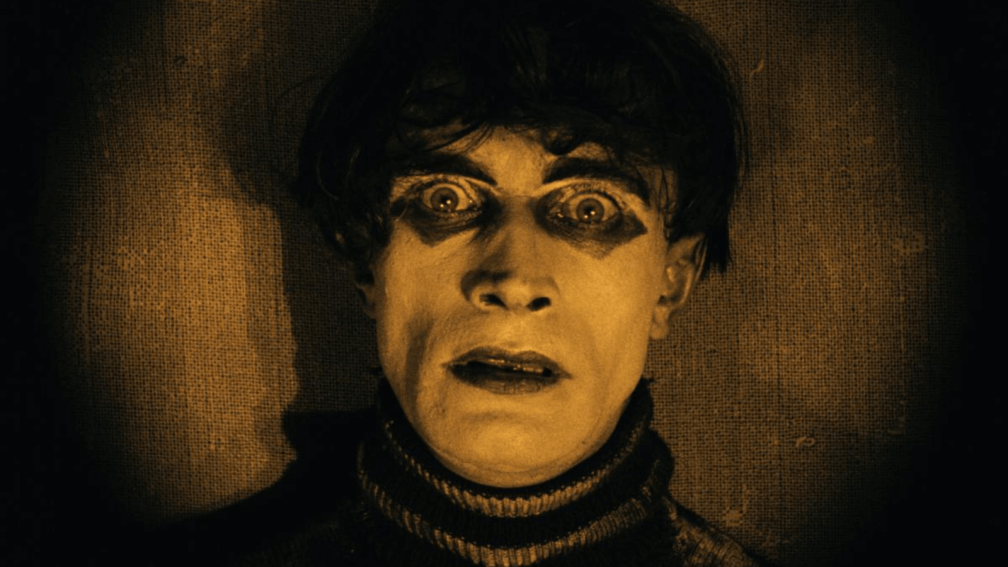
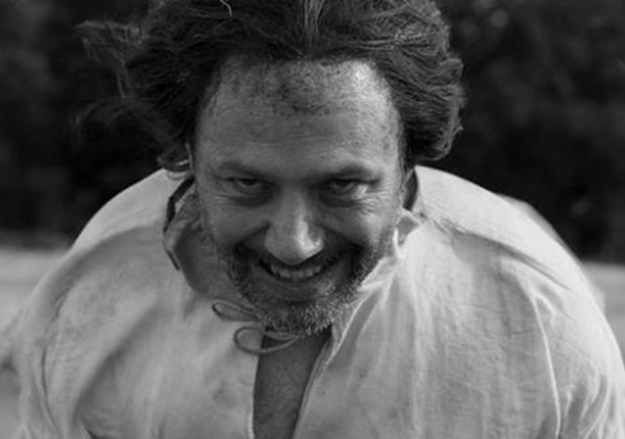

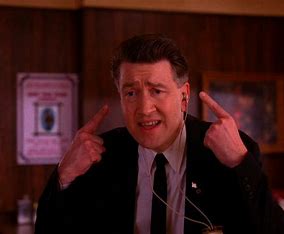


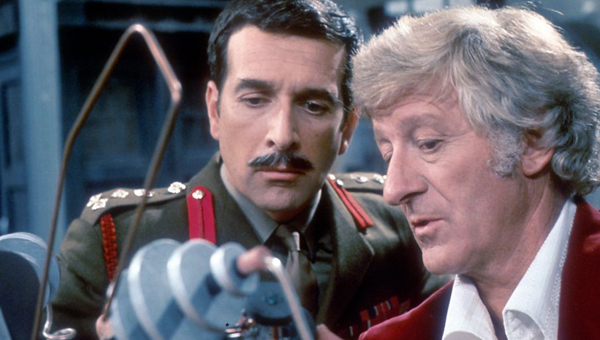

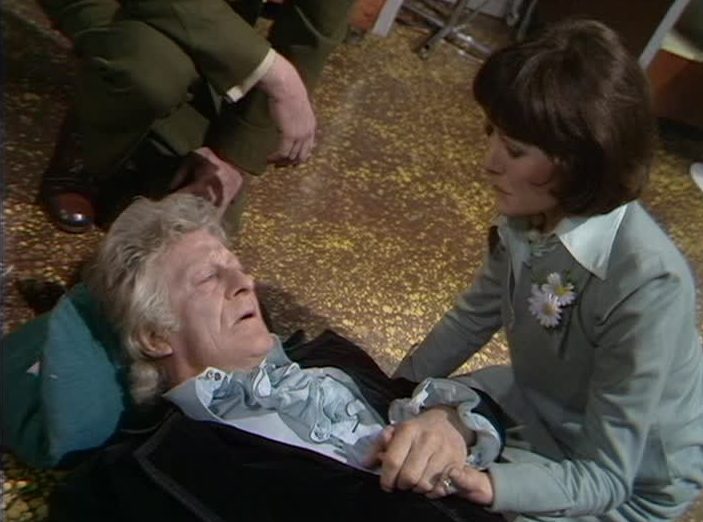
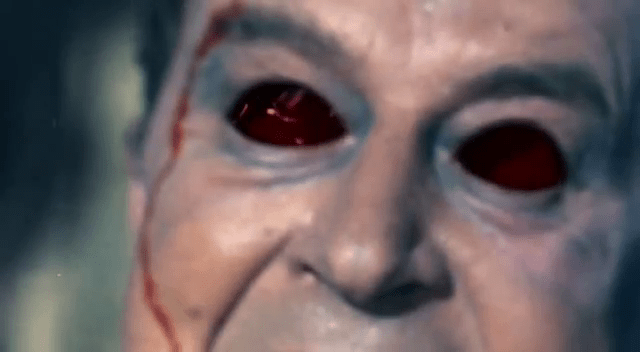


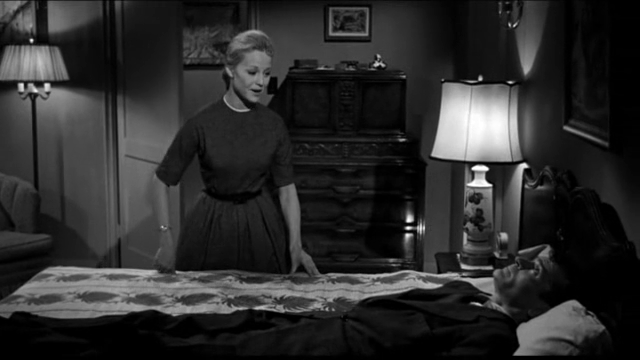
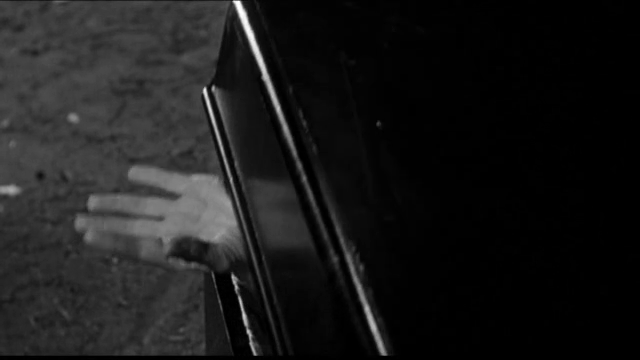
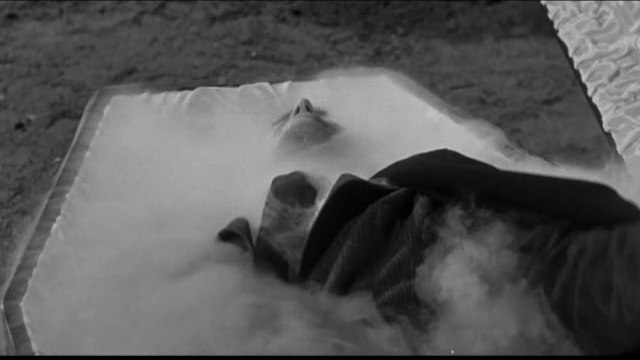

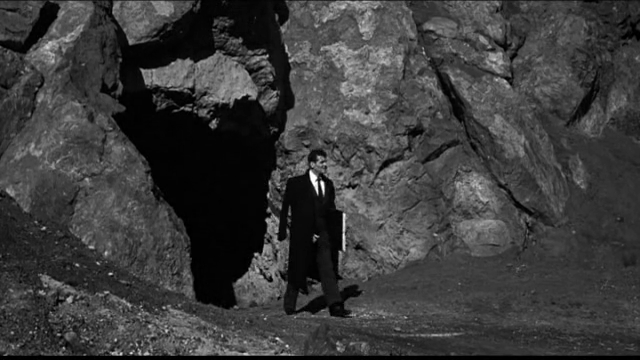


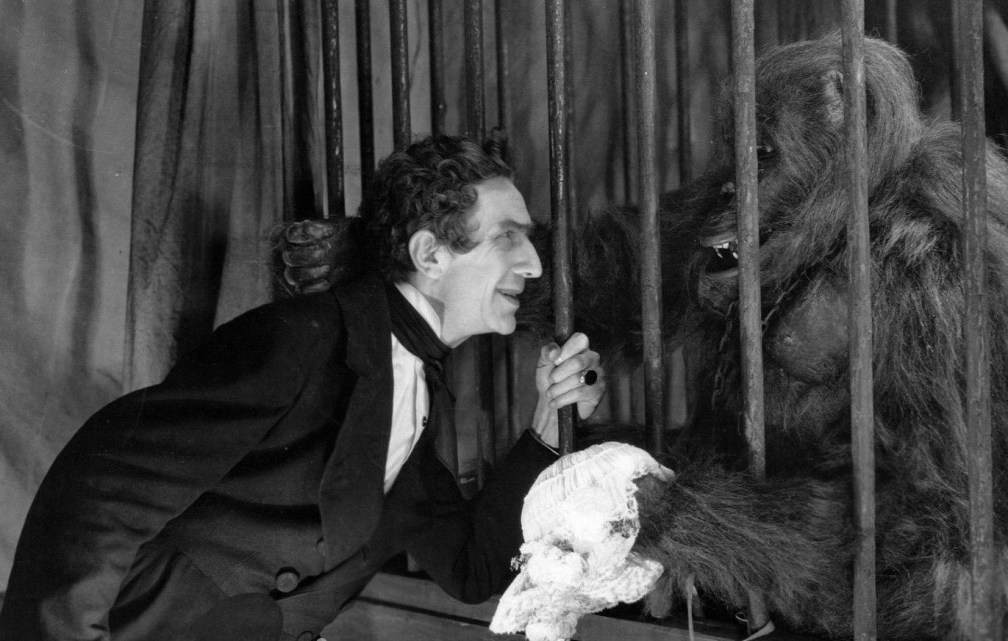


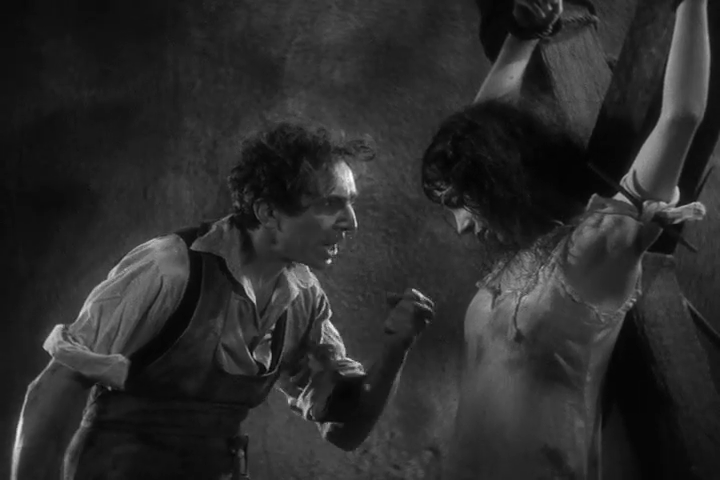


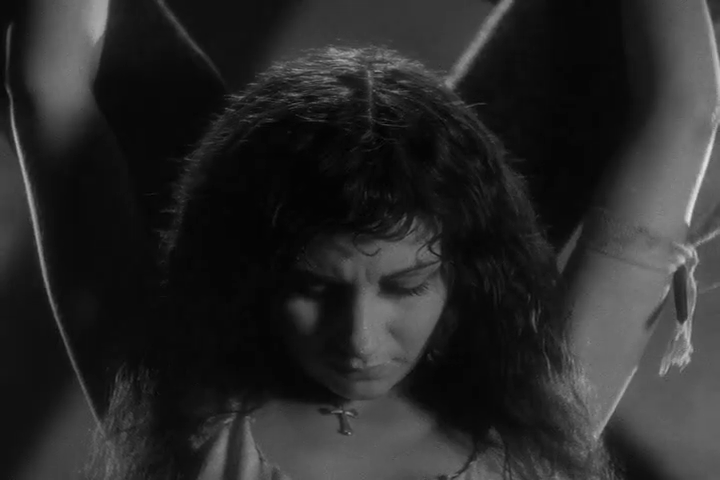


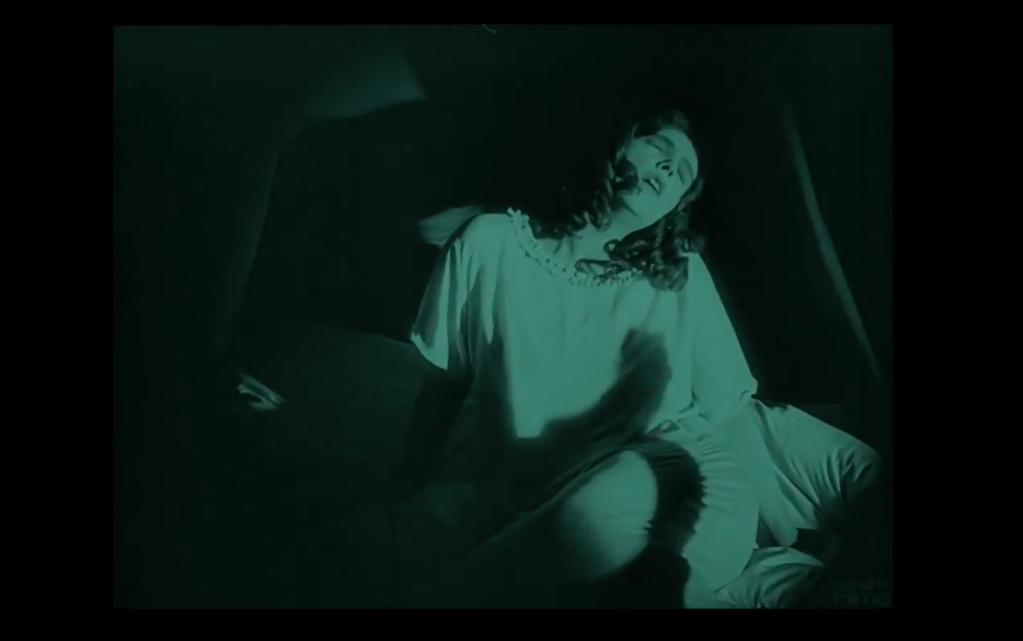

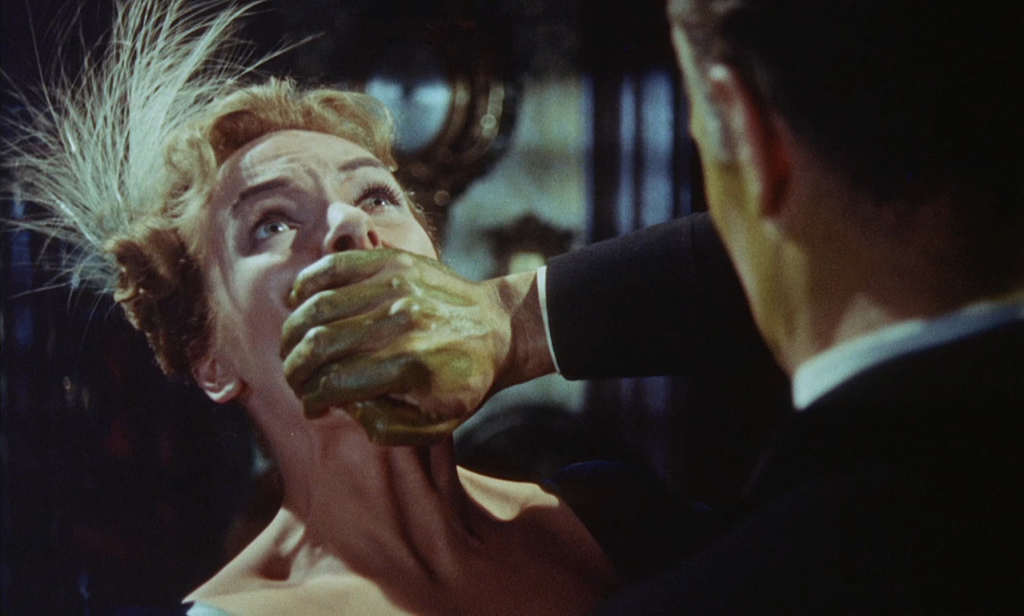
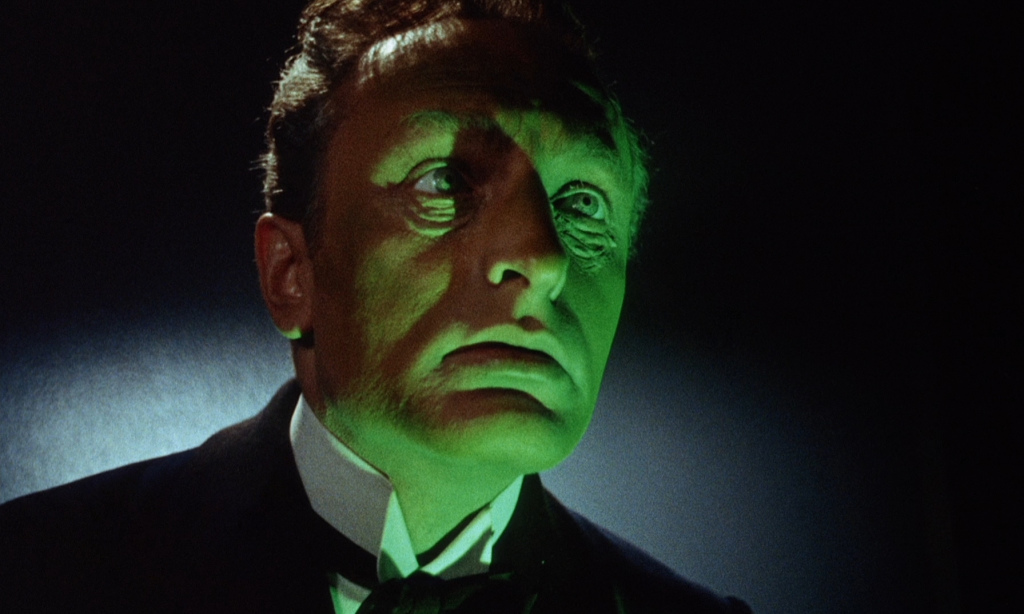





 Dracula, Frankenstein and Friends